How to Pair olive oil with food: tips and recipes for better flavor

Extra virgin olive oil is not only a staple of Mediterranean cuisine, but also a versatile seasoning that can enhance almost any dish. In this article, we’ll explore different foods that you can pair with high-quality olive oil, and provide simple recipes to help you make the most of its rich aroma.

1. Garlic and herb starter

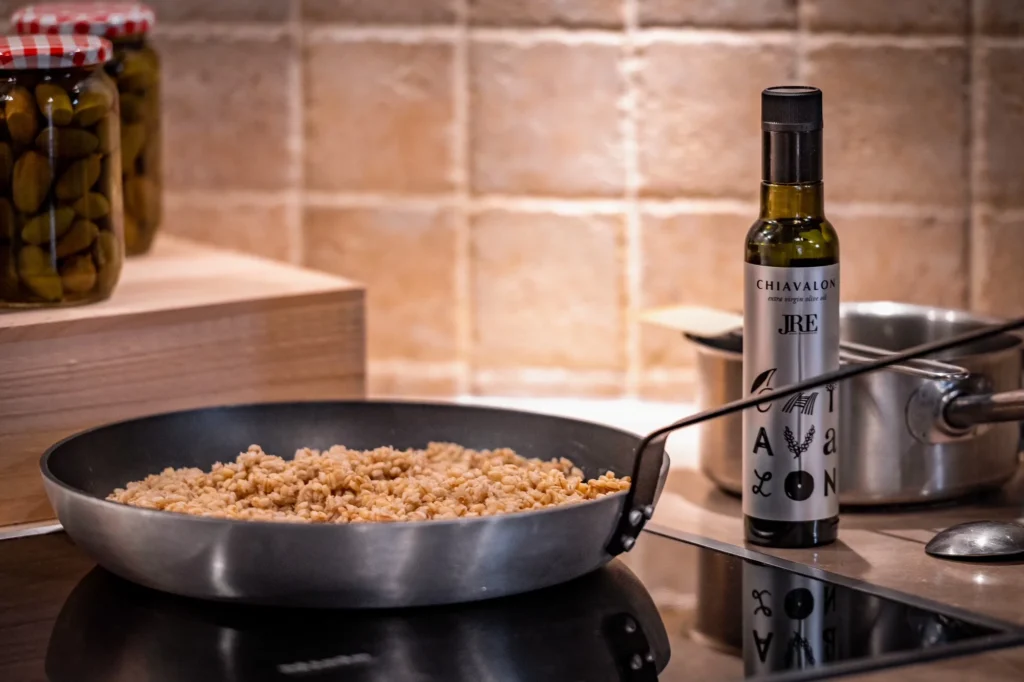
One of the simplest yet most delicious ways to enjoy Chiavalon olive oil is by preparing a quick starter with garlic, herbs, and olive oil. This dish is perfect as an appetizer and pairs wonderfully with bread.

Ingredients:

  • 100 ml of Ex Albis extra virgin olive oil
  • 2-3 garlic cloves (finely chopped)
  • 1/2 tsp dried oregano or thyme
  • A pinch of salt
  • A pinch of freshly ground black pepper
  • Bread of choice (preferably sourdough, ciabatta, or baguette)

Instructions:

  1. In a small pan, add the Chiavalon olive oil and chopped garlic. gently heat, being careful not to burn the garlic.
  2. Add the dried oregano, salt, and pepper, and cook for another minute.
  3. Pour the mixture over sliced pieces of bread and serve. This simple recipe is a perfect way to enjoy the richness of extra virgin olive oil.
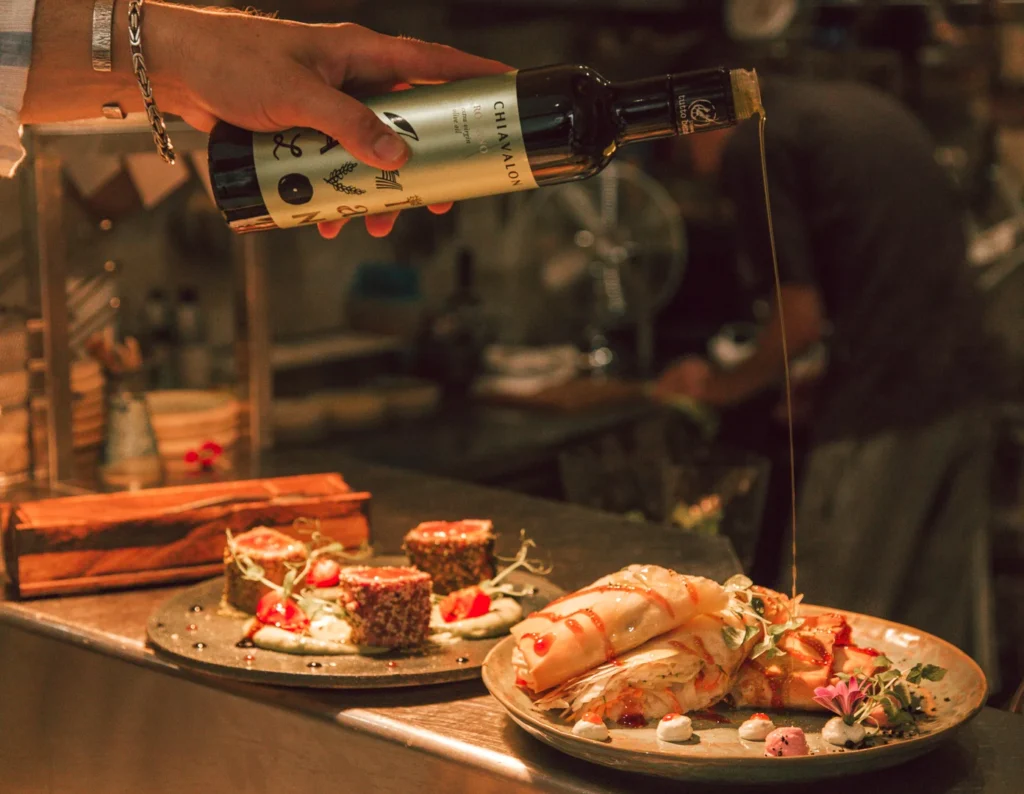
2. Olive oil salad dressing

A good dressing can completely transform a salad. Given the richness that Chiavalon extra virgin olive oil offers, it’s one of the easiest ways to add depth of flavor to even the simplest salads.

Ingredients:

Instructions:

  1. In a small bowl, mix the extra virgin olive oil, apple cider vinegar, Dijon mustard, salt, and pepper.
  2. Stir until all ingredients are well blended.
  3. Drizzle the dressing over freshly prepared salad greens, arugula, tomatoes, and cucumbers. This dressing can also be used for roasted vegetables.

3. Olive oil with grilled vegetables

Grilled vegetables are a perfect way to enjoy Chiavalon olive oil. Drizzle the oil over vegetables before or after grilling, or use it as a marinade.

Marinade ingredients:

Instructions:

  1. In a bowl, mix the extra virgin olive oil, lemon juice, garlic, oregano, salt, and pepper.
  2. Place your vegetables (e.g., zucchini, peppers, eggplant) in the bowl and coat them with the marinade. Let them sit for 30 minutes.
  3. Grill the vegetables over medium heat, occasionally basting with the remaining marinade. Serve with a final drizzle of Chiavalon Organic olive oil for extra flavor.
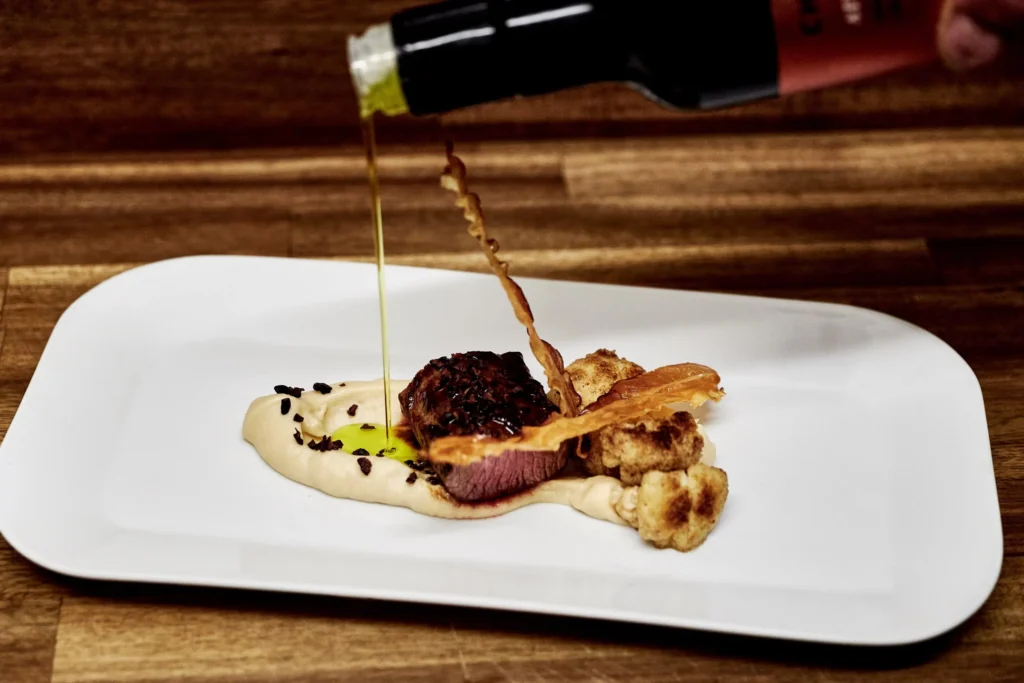
4. Olive oil in pasta and fish dishes

Chiavalon olive oil is also perfect for enhancing pasta and fish dishes. If you’re looking for a simple yet flavorful meal, try this combination.

Pasta Ingredients:

  • 100 ml of Istra extra virgin olive oil
  • 200 g pasta of choice (spaghetti or linguine are ideal)
  • 2 garlic cloves, chopped
  • Fresh parsley
  • A pinch of red pepper flakes
  • Salt and pepper

Instructions:

  1. Cook the pasta according to the instructions on the package.
  2. In a pan, heat the olive oil, add the garlic, and cook until golden brown.
  3. Add the red pepper flakes, parsley, salt, and pepper. Toss the cooked pasta with the olive oil mixture and serve with a little extra Chiavalon Istra olive oil on top.

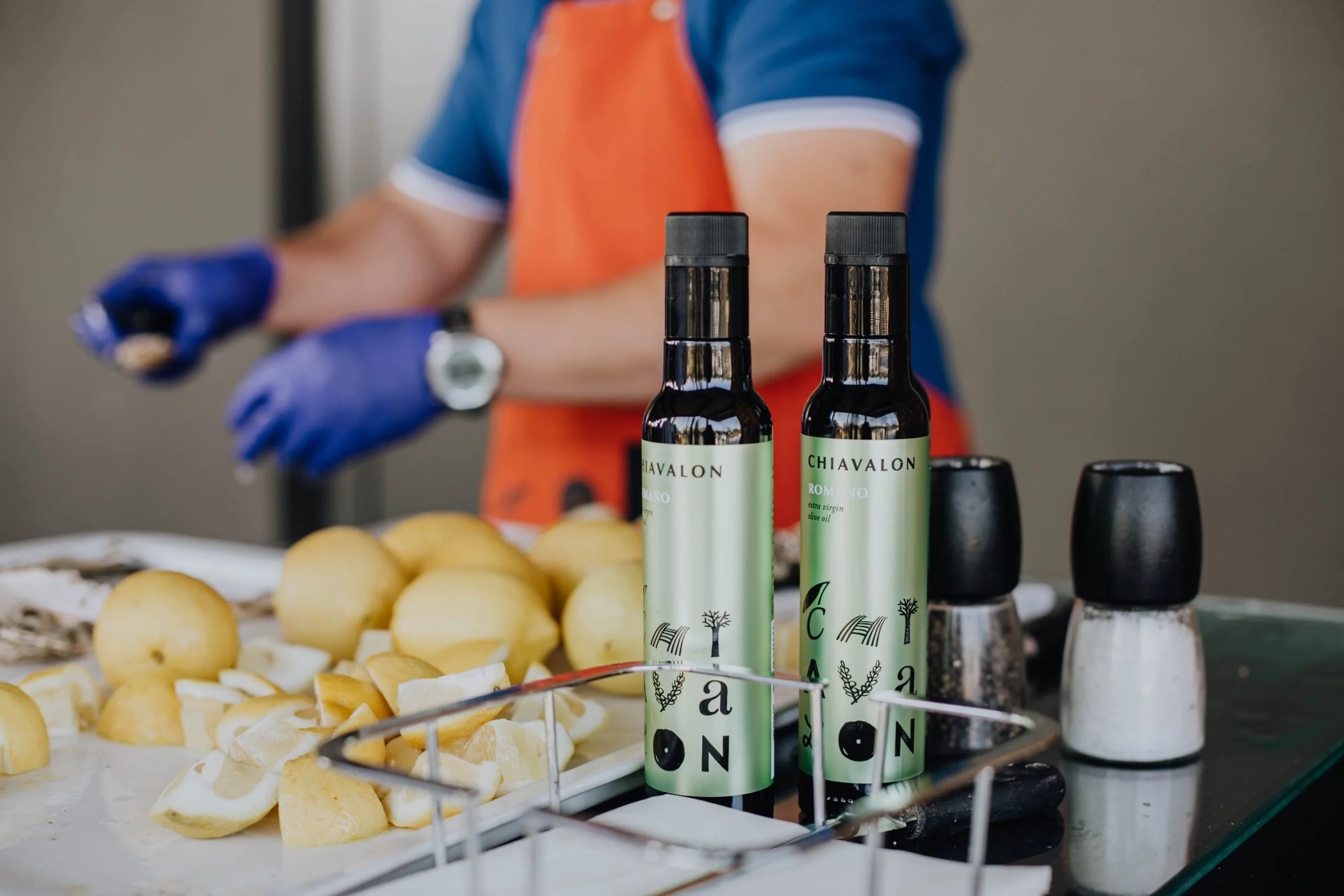
For fish lovers, you can also use our Romano olive oil for grilling or roasting fish. Simply drizzle olive oil over the fish, sprinkle with salt, pepper, and lemon, and cook to your liking.
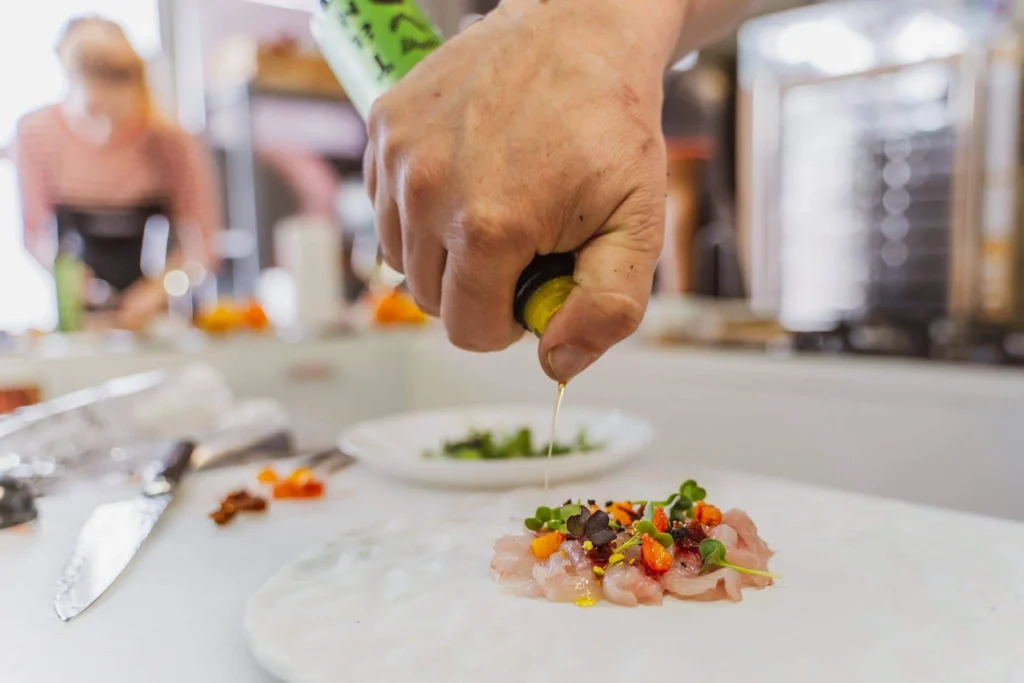
5. Olive oil in desserts? Yes!

It may sound unusual, but Chiavalon olive oil can also be used in desserts, adding richness and depth of flavor. Here’s a great recipe for an olive oil cake.

Cake Ingredients:

Instructions:

  1. Mix the dry ingredients in one bowl.
  2. In another bowl, whisk together the eggs, sugar, olive oil, and lemon zest.
  3. Gradually add the dry ingredients to the wet mixture, stirring until smooth.
  4. Pour the batter into a greased cake tin and bake at 180°C (350°F) for about 30 minutes.
  5. Serve chilled, dusted with powdered sugar.

Chiavalon olive oil is incredibly versatile and can enhance the flavor of a wide variety of dishes—from appetizers and salads to pastas and even desserts. With these simple yet delicious recipes, you can easily add richness and depth to every meal. Don’t be afraid to experiment with new combinations and enjoy the healthy, perfect flavors that olive oil has to offer!
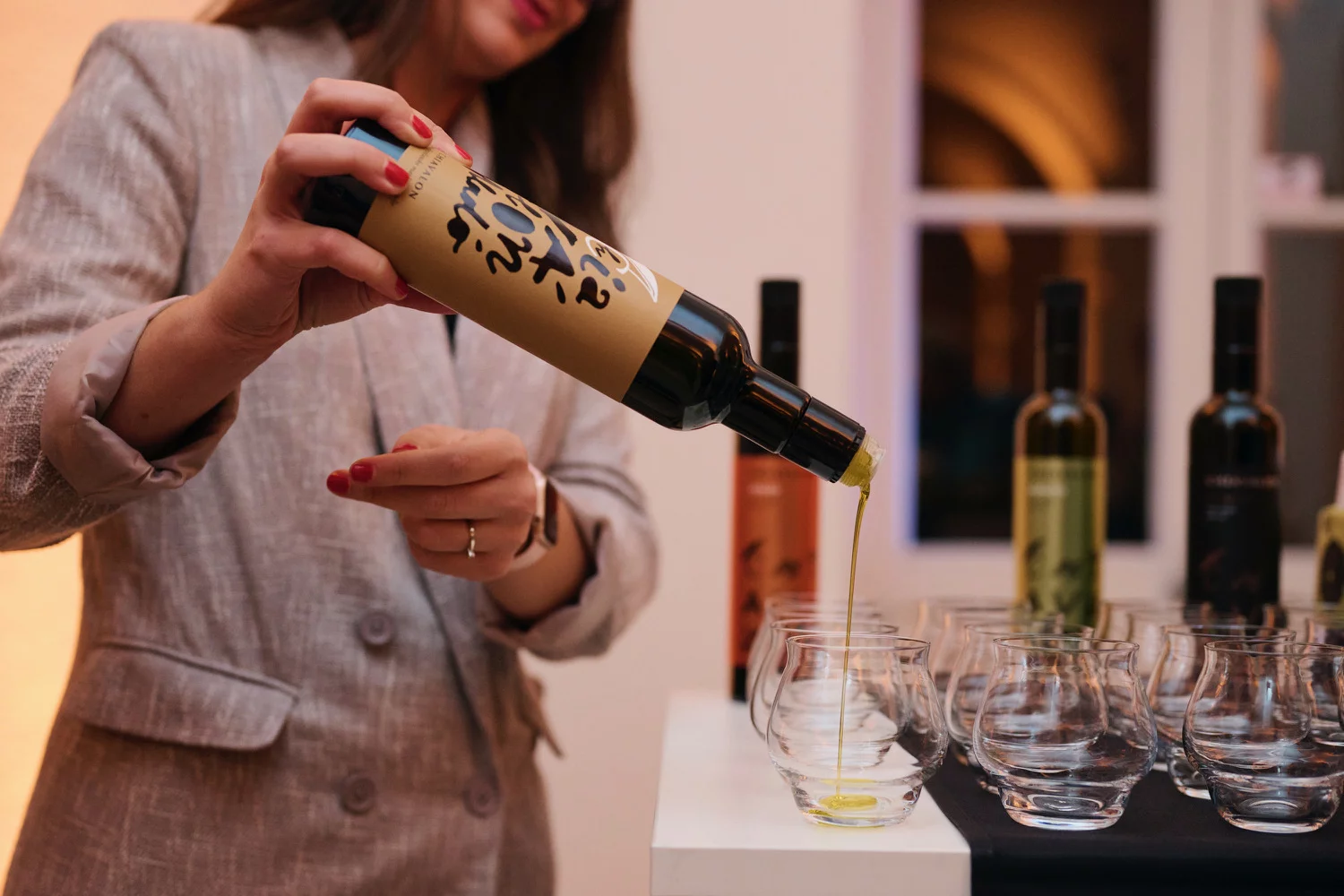
How to store olive oil properly for maximum freshness

To get the most out of your Chiavalon olive oil, it’s important to store it properly. Olive oil is a delicate product, and exposure to light, heat, and air can cause it to degrade quickly. Follow these tips to ensure your olive oil stays fresh and flavorful for as long as possible.

Keep it in a cool, dark place

Olive oil should be stored away from direct sunlight. Exposure to light can cause the oil to break down and lose its flavor. Store your Chiavalon olive oil in a cool, dark cupboard or pantry, ideally at a temperature between 15–18°C (59–65°F), but room temperature around 21-22°C is also fine if is not exposed to the sun directly. 

Avoid heat

Outside heat is one of the biggest enemies of olive oil. It can cause the oil to oxidize, resulting in a rancid taste if it is stored near your stove, oven, or other heat sources. Instead, keep it in a stable, cool environment to maintain its quality.

Seal the bottle tightly

Once you’ve opened your bottle of Chiavalon olive oil, make sure to seal it tightly after each use. Exposure to air can cause oxidation, which degrades the oil and affects its flavor. If you’re using a pour spout, ensure it’s tightly fitted when not in use.

Use smaller bottles

If you don’t use olive oil frequently, consider buying smaller bottles. This way, you can open one bottle at a time, keeping the others sealed and fresh for longer. Chiavalon extra virgin olive oil comes in various sizes, making it easy to choose one that fits your needs.

Check the expiry date

While olive oil doesn’t spoil in the same way perishable foods do, it does have a shelf life. Be sure to check the expiration date on your bottle and try to use the oil within 18 months of harvest for the best flavor and quality. Although it is common to see bottles labeled with ’24 months from bottling,’ which follows the law, this does not guarantee that the oil comes from the harvest of that particular year. As such, this labeling practice can be misleading for consumers. For this reason, it is always advisable to look for an olive oil producer who specifies the harvest year and month on the label, and then calculates the shelf life of 18 or, at most, 24 months from that date, as the law requires.

Proper storage is key to maintaining the freshness and flavor of your Chiavalon olive oil. By keeping it in a cool, dark place, sealing it tightly, and checking its expiry date, you can enjoy the full benefits of this high-quality product for months to come.

The history and origins of olive oil: From Ancient Greece to Chiavalon

Olive oil has been an essential part of human culture for thousands of years. From its early origins in the Mediterranean to its global popularity today, olive oil has a rich history that reflects its importance in both cooking and culture. 

The birth of olive oil in ancient times

The use of olive oil dates back over 6,000 years, with evidence suggesting it was first cultivated by ancient civilizations in the Mediterranean, including the Greeks and Phoenicians. Olive oil was not just a food product — it was used in religious ceremonies, for lighting lamps, and even in medicinal treatments. During the Roman Empire, olive oil became a significant trade item. The Romans spread olive cultivation across Europe, particularly in regions like Spain, Italy, and Greece. Olive oil was used for everything from cooking to bathing, making it a symbol of wealth and luxury.

Olive Oil Production in Istria: a tradition of excellence

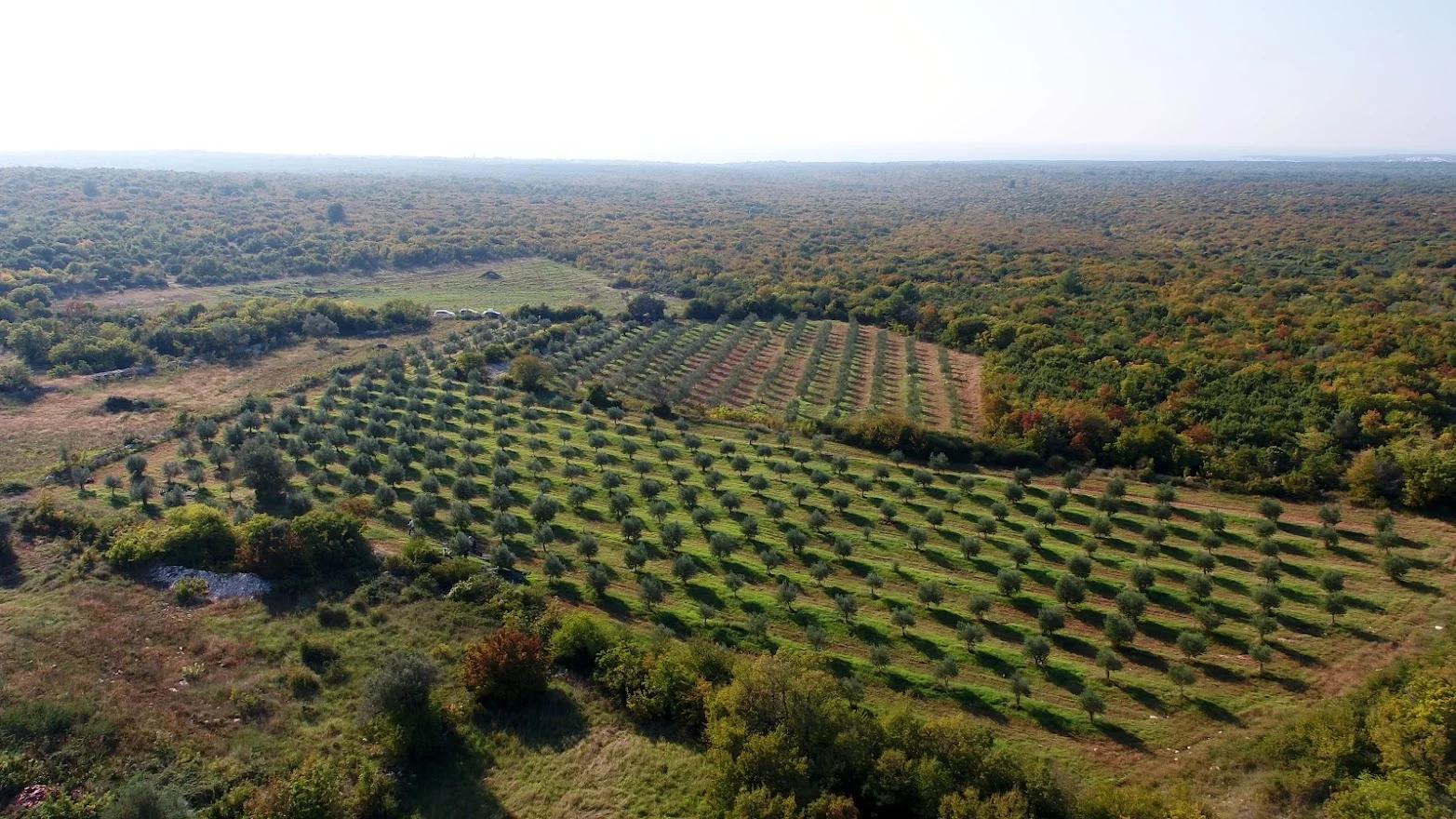
Istria, the picturesque peninsula in the northern Adriatic, is renowned not only for its stunning landscapes and rich cultural heritage but also for its exceptional olive oil. With its fertile soil, mild climate, and a centuries-old tradition of olive cultivation, Istria has established itself as one of the world’s premier regions for producing top-quality extra virgin olive oil.

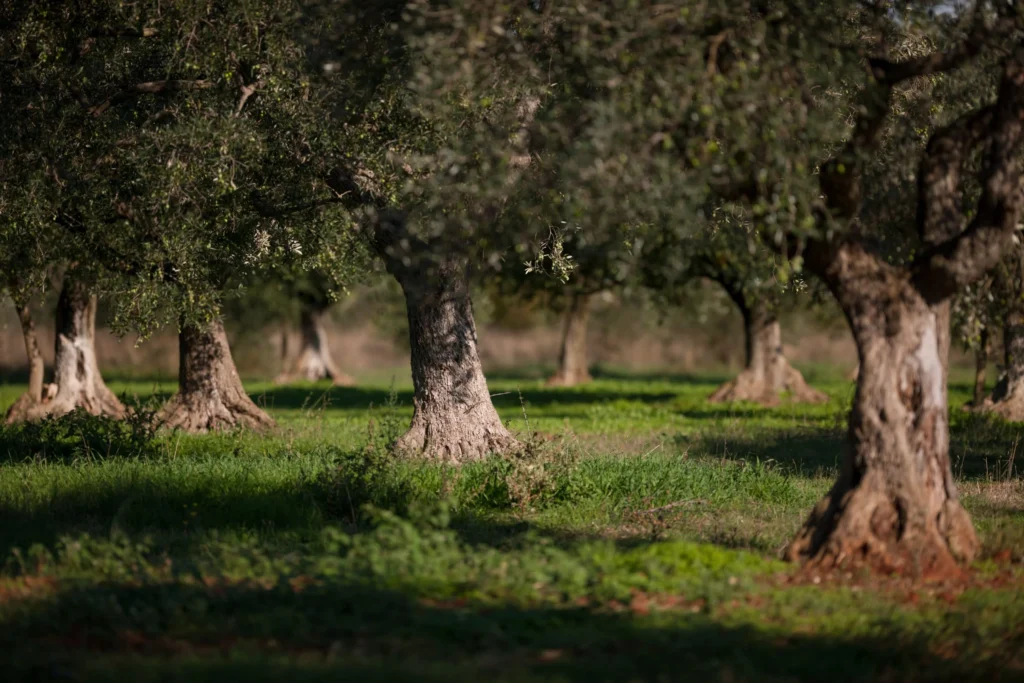
Olive trees have been cultivated in Istria for more than two thousand years. The roots of olive oil production in this region stretch back to ancient Roman times when olive trees were introduced by Roman settlers. However, it was during the Venetian period (14th to 18th centuries) that the olive industry in Istria truly flourished. The Venetians not only encouraged olive cultivation but also established olive oil mills that became an integral part of the Istrian agricultural landscape. The Brijuni National Park is home to the oldest olive tree in the region, estimated to be 1,600 years old and still bearing fruit. Pliny the Elder, in his book Naturalis Historia, recognized Istria alongside Venafro (Italy) and Betica (Andalusia) for its significance in olive oil production. The Roman poet Marcus Valerius proclaimed: “Uncto Corduba laetior Venafro, Histria nec minus absoluta testa” -> “Cordoba, you are richer than oily Venafro and as perfect as the olive oil of Istria.”

By the 19th century, olive oil from Istria had already earned a reputation for its excellent quality. Today, the region’s olive oil production continues to be a proud tradition. Istria has been named the best olive oil-producing region in the world seven times by the Italian guide Flos Olei.

The rise of modern olive oil producers

In the past few decades, Istria has seen a renaissance in olive oil production. The region has embraced new technologies while maintaining traditional methods of cultivation and production. Today, Istria is home to over 1,000 olive oil producers, ranging from small family-owned farms to larger commercial estates. This diverse range of producers is one of the reasons why Istrian olive oils stand out for their richness, complexity, and unique flavors.

The modern approach to olive oil production in Istria combines the best of both worlds: traditional craftsmanship and state-of-the-art machinery. The olives are hand-harvested at the peak of ripeness, usually in early autumn, and then processed using cold-press methods that preserve the oil’s natural flavors and nutrients. Many producers also use organic and sustainable farming practices, further elevating the quality and reputation of Istrian olive oil.

Why Istria is a top region for olive oil production

Several factors make Istria an ideal region for olive oil production, placing it among the world’s best.

  • Climate and soil

   Istria’s Mediterranean climate – with hot, dry summers and mild winters – combined with its fertile soil, creates the perfect conditions for growing olives. The region’s terroir plays a significant role in the oil’s distinct flavor profile, which is characterized by its fruitiness, bitterness, and peppery finish.  Istria, along with Tuscany and Lake Garda, is one of the northernmost olive-growing regions in the world, producing exceptional results in terms of olive oil quality.

  • Variety of olive cultivars

   Istria is home to several indigenous olive varieties, with the most famous being Buža. This local variety is known for its robust flavor and high-quality oil. Other varieties grown in the region include Istrian bianchera, Rosignola, Busa, Carbonazza, and Zizolera which contribute to the complexity and diversity of Istrian olive oils.

  • Commitment to quality

   The commitment to producing high-quality olive oil is evident throughout Istria. Producers are dedicated to preserving traditional methods while embracing innovation. This has resulted in a wide range of Istrian olive oils that have earned numerous awards at international competitions.

  • Sustainability and innovation

   Many Istrian olive oil producers are deeply committed to sustainability. Practices such as organic farming, water conservation, and waste management are increasingly common. Producers are also focusing on reducing their carbon footprint and ensuring that their products are environmentally friendly, which further enhances the reputation of Istrian olive oil on the global market.

Istrian olive oil in the global market

Istrian olive oil is highly sought after around the world. The region’s olive oils are not only prized for their exceptional quality but also for their health benefits. Rich in antioxidants, polyphenols, and omega-3 fatty acids, Istrian olive oil is celebrated for its potential to improve heart health, reduce inflammation, and support overall well-being.

From ancient Roman times to the present day, olive oil production in Istria has evolved into a sophisticated, world-class industry. The region’s favorable climate, commitment to quality, and innovative approach to sustainable farming have made it a leading player in the global olive oil market. With a strong emphasis on tradition, sustainability, and innovation, Istria’s olive oils are destined to remain among the finest in the world.

Whether you are a connoisseur or a casual cook, there is no better way to experience the richness of Istria’s culinary culture than by tasting its exceptional olive oils. 

Chiavalon Farm Wins Prestigious Award from Flos Olei for 2024

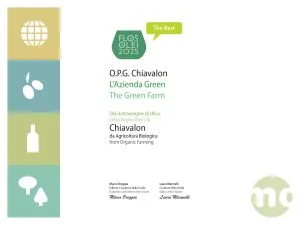
Chiavalon Farm has concluded an exceptional 2024 with one of the most significant accolades in the world of extra virgin olive oil production. The estate has been named “Best Green Farm” – the world’s best organic olive oil producer, according to Flos Olei, the most renowned global guide to olive oils.  

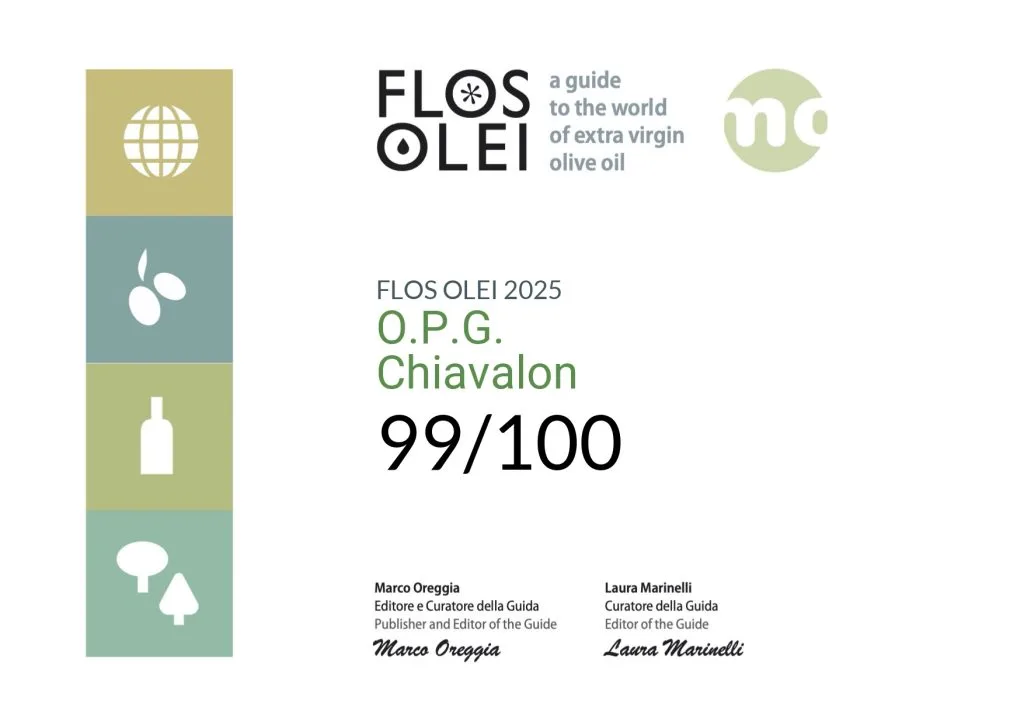
Flos Olei is an authoritative international platform that evaluates only the highest quality extra virgin olive oils from around the world. Winning the title of the best organic producer means a lot to us, as it confirms our commitment to sustainability, organic farming, and the highest quality standards. In addition to the prestigious title, our olive oils received an outstanding score of 99 out of 100 points, a testament to the excellence we achieve at every step of production. 

“This recognition is not only the result of our efforts in olive oil production but also of our continuous investment in environmental sustainability and innovation. Chiavalon Farm takes pride in its approach, which includes respecting natural resources and biodiversity, investing in renewable energy sources, and using environmentally friendly methods in every aspect of our process,” said Sandi Chiavalon after receiving this prestigious award.  

Through carefully selected indigenous olive varieties, innovative technology, and a passion for excellence, our goal is to deliver the highest quality olive oil to our customers—oil that is not only beneficial for health but also for the environment. All our products are made with the aim of preserving biodiversity and reducing the negative impact on the planet. The Best Green Farm award from Flos Olei confirms that we are not just olive oil producers—we are guardians of nature, committed to sustainability and responsible resource management.  

What Does This Title Mean for Chiavalon Farm?

“By winning the title of Best Green Farm and achieving an impressive 99 points for the quality of our olive oils, our estate reaffirms its status as a leader in the extra virgin olive oil industry. This result motivates us to continue improving—not only in terms of product quality but also in environmental conservation, social responsibility, and innovations in the olive-growing sector.  

This prestigious award is not just a victory for our family, without whom none of this would be possible. It is also a great recognition for all our employees, business partners, and, of course, our loyal customers who believe in our work and support us every step of the way. Thank you all for the trust you place in us – your satisfaction and feedback are key to our success,” concluded Tedi Chiavalon.

An Award for the Entire Agricultural Sector of Istria and Croatia

Finally, it is important to emphasize that the Best Green Farm award is also an award for the entire agricultural sector of Vodnjan, Istria, and Croatia, as well as for all individuals who, through their work, perseverance, vision, and motivation, have enabled Istrian olive oils to achieve such highly respected global recognition. This award not only confirms the quality of our estate but also highlights the strength and dedication of the entire olive-growing community in the region.  

Merry Christmas and a Prosperous New Year 2025 from the Chiavalon Family!

Dear friends, partners, and olive oil enthusiasts,

The end of the year is always a special time—a moment to reflect, celebrate achievements, and plan for what lies ahead. This year has brought many challenges, but also countless successes that inspire us to move forward with even more passion and dedication.

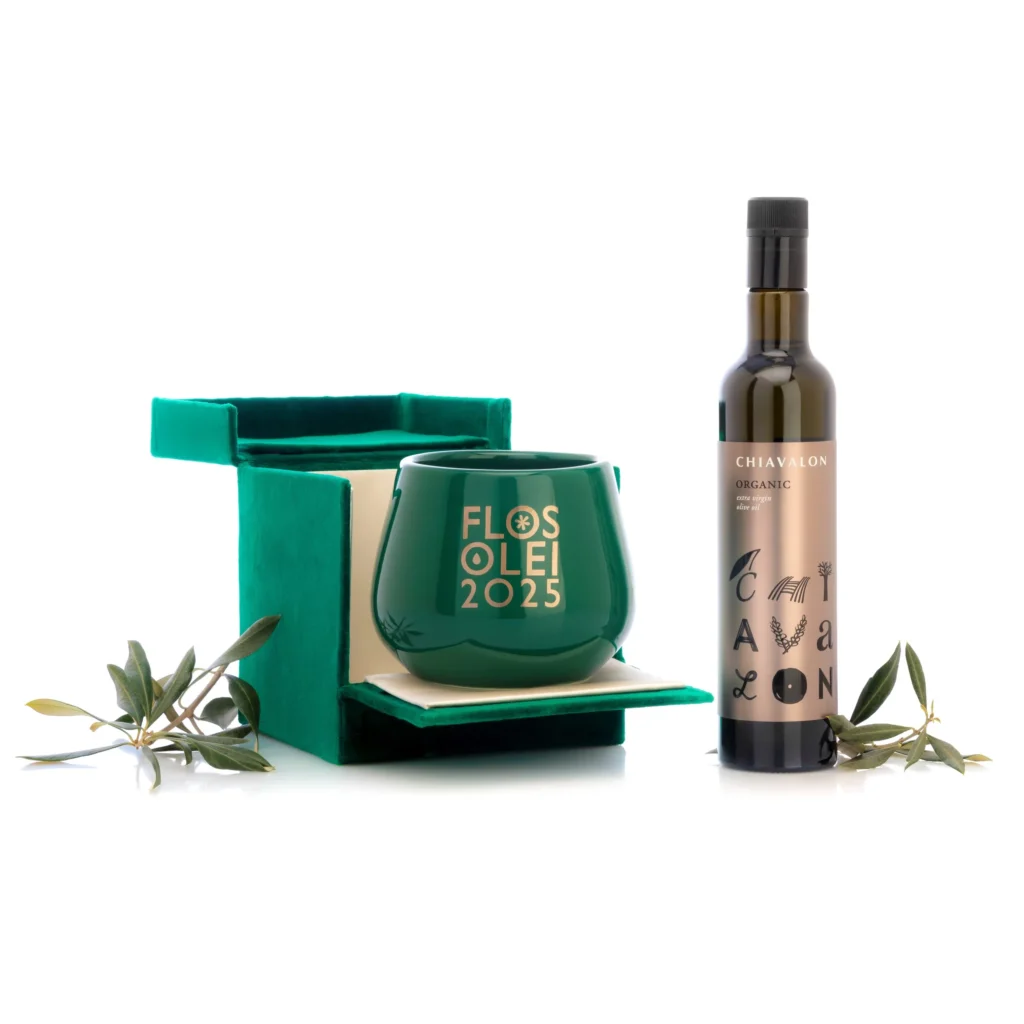
Among the many awards and recognitions, we received this year, it still feels incredible to recall being honored with the prestigious Premio Il Magnifico for “Best Olive Oil Hospitality in Europe” at the heart of Tuscany earlier this year. Additionally, just before this year’s harvest, the Italian guide Flos Olei named us the “Best Green Farm in the World,” recognizing us as the world’s best producer of organic extra virgin olive oil!

We are immensely proud of our Chiavalon team, whose hard work and dedication make every step of our process unique. From the olive groves to your kitchen, every drop of our oil reflects their commitment. Thank you for being a part of our journey and for trusting us, enabling us to grow and improve year after year.

During the holiday season, we wish you joyful moments with your loved ones, surrounded by festive tables, delicious food, and plenty of cheer. If our bottles of olive oil grace your table and Chiavalon is part of your holiday tradition, thank you—we are honored to share these special moments with you.

To enter 2025 with fresh energy and ideas, our team will be taking a well-deserved break from December 21, 2024, to January 12, 2025. During this time, our webshop will remain open for orders, which we will begin shipping upon our return on January 13, 2025.

From the bottom of our hearts, we wish you a blessed Christmas and a healthy, happy, and prosperous New Year! Thank you for being part of our story.

With love,

The Chiavalon Family

Interview: Sandi Chiavalon on the 2024 harvest and the impact of Climate Change on olive farming

What weather conditions did 2024 bring for olive growers in Istria?

This year was a very challenging one. We had a rainy and wet spring followed by a very dry summer. There’s an old saying, “anno d’erba, anno di merda” (a year of grass, a bad year), and this year the grass just wouldn’t stop growing. The rain made it difficult to protect the olives from peacock’s eye disease, and conditions were perfect for pest reproduction. Fortunately, the hot summer with temperatures over 32°C made the olive fly sterile, and there wasn’t much pest damage, except in areas affected by certain new pests. Despite these challenges, we defended our groves, and the harvest is quite good, though rain during harvest reduced yields slightly.

Did climate change affect this year’s harvest?

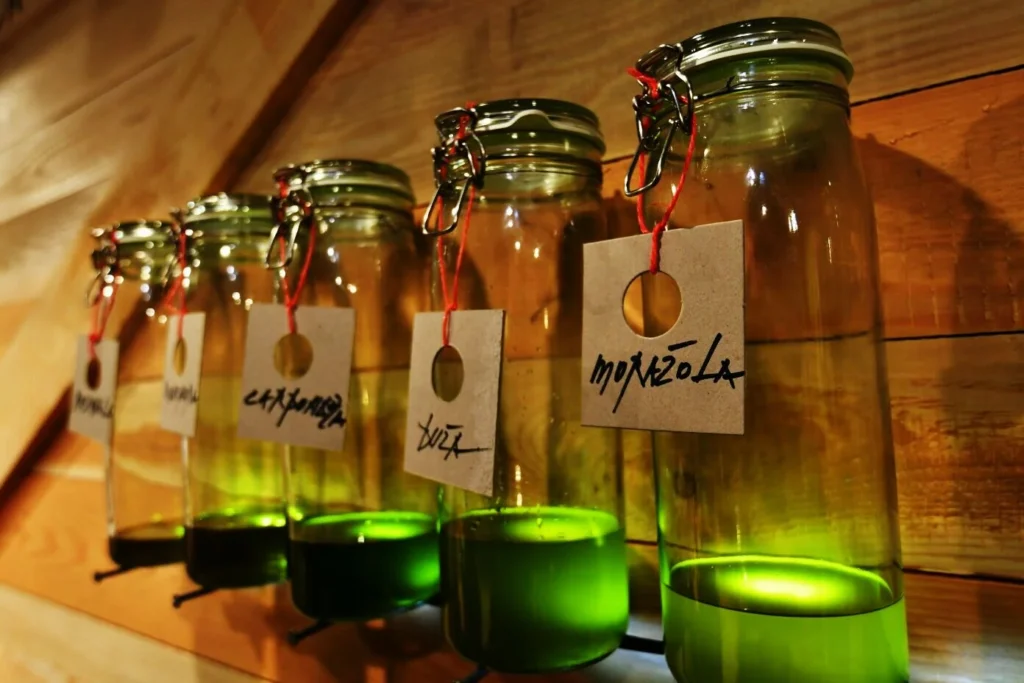
The harvest is happening at an ideal time for specific varieties, and we’re picking them one by one. This year, we harvested the Bjelica variety first, which was previously a late variety but has now become the earliest due to climate change. We also harvested Rožinjola, while Leccino and Pendolino, once early varieties, are now late and still ripening. All the oils will be stored in our cellar.

Under what conditions is olive oil stored to ensure top quality?

The ideal conditions protect the oil from light, temperature, and oxygen. Our “black room” maintains a temperature of 16°C, and the oil is stored in stainless steel tanks under an argon atmosphere to prevent oxidation. Before each harvest, the tanks are steam-cleaned for disinfection.

How is the process of blending varieties carried out?

We blend different varieties of olive oil in a way that we take small amounts from different tanks, and blend them in bottles until we get few options for tasting over several days. Once we decide how we want the blends to taste, the corresponding tanks are mixed. The oils are then bottled throughout the year as per customer orders – not all at once.

Who is involved in selecting the perfect blend?

Almost the entire company is involved in the process, but it is mainly handled by Anja Novoselić, PhD, an expert in olive oil, Lara Benčić, M.Sc. in Agronomy and an olive oil sommelier, and myself. Vita Chiavalon, my daughter, also plays a major role, as she has an excellent sense for recognizing olive oil aromas and flavors. My son Antonio is also becoming increasingly interested and is improving steadily. Once a test blend is made, it is tasted not only by us but also by some of our distributors and clients, and only then is the selection process complete.

How is hygiene maintained in producing extra virgin olive oil?

The mill must be spotless to produce top-quality olive oil. After each break, everything is cleaned because any residue from previous batches can oxidize and spoil the next one. Cleaning the mill takes 5-6 hours, depending on weather and the number of olives harvested. At the beginning and end of the harvest, we stop daily for cleaning, while during peak harvest, it’s cleaned between each client.

Besides expertise and technology, weather is an unpredictable factor in olive farming. What quality of extra virgin olive oil do you expect from this year’s harvest?

The rain positively impacted the quality of the oil. The oils are very aromatic, intense, and full of flavor, and I believe our clients will be very satisfied.

Hydrating your skin after summer: The power of natural oils

Hydrating your skin after summer is essential to combat premature aging. Sun, saltwater, and heat dehydrate the skin and can cause long-term damage. UV rays harm cellular tissue, break down collagen, and dry out the epidermal layer, making it thinner and less toned. Fortunately, nature provides powerful oils to revitalize the skin after sun exposure. In this article, we explore the benefits of extra virgin olive oil, St. John’s wort oil, bay leaf oil, and rosemary oil, along with a DIY recipe that you can easily incorporate into your daily skincare routine.

Olive Oil: Deep skin hydration

Extra virgin olive oil (EVOO) offers deep skin hydration. Rich in oleic acid and vitamin E, it strengthens the skin’s surface layer, preventing moisture loss. Its antioxidant properties also reduce oxidative stress caused by UV exposure. By restoring elasticity and hydration, EVOO slows down skin aging and the deepening of wrinkles. Besides these long-term benefits, EVOO provides an immediate effect, giving the skin a natural glow after just a few days of regular application.

St. John’s Wort Oil: Healing from within

St. John’s wort oil is renowned for its healing properties, especially effective for skin damaged by excessive sun exposure. Its anti-inflammatory properties help reduce redness and irritation, promoting faster healing of damaged skin. The oil also possesses antiviral, antifungal, and antibacterial properties. Use St. John’s wort oil after sun exposure and thoroughly rinse your skin before further sun exposure, as it is photosensitive. Learn more about its healing benefits here.

Bay Leaf Oil: Skin revitalization

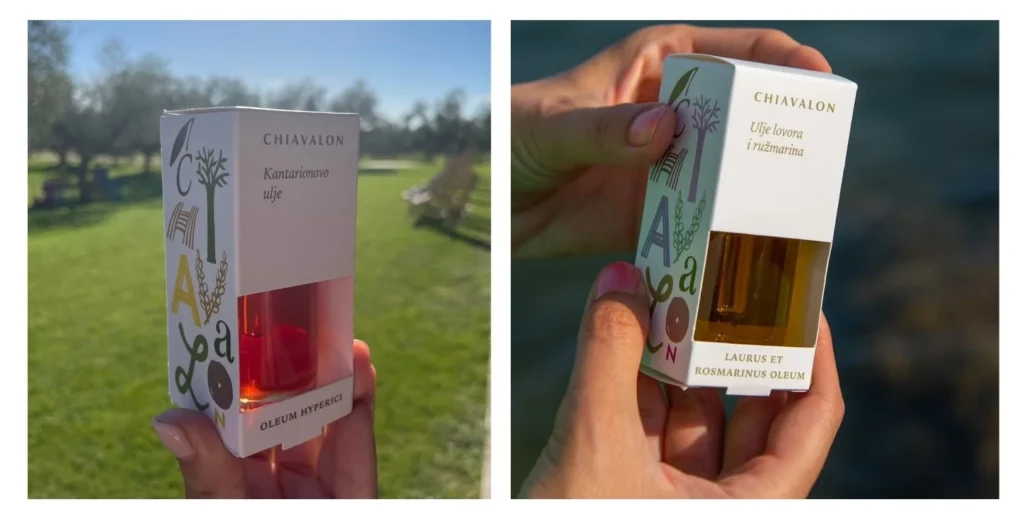
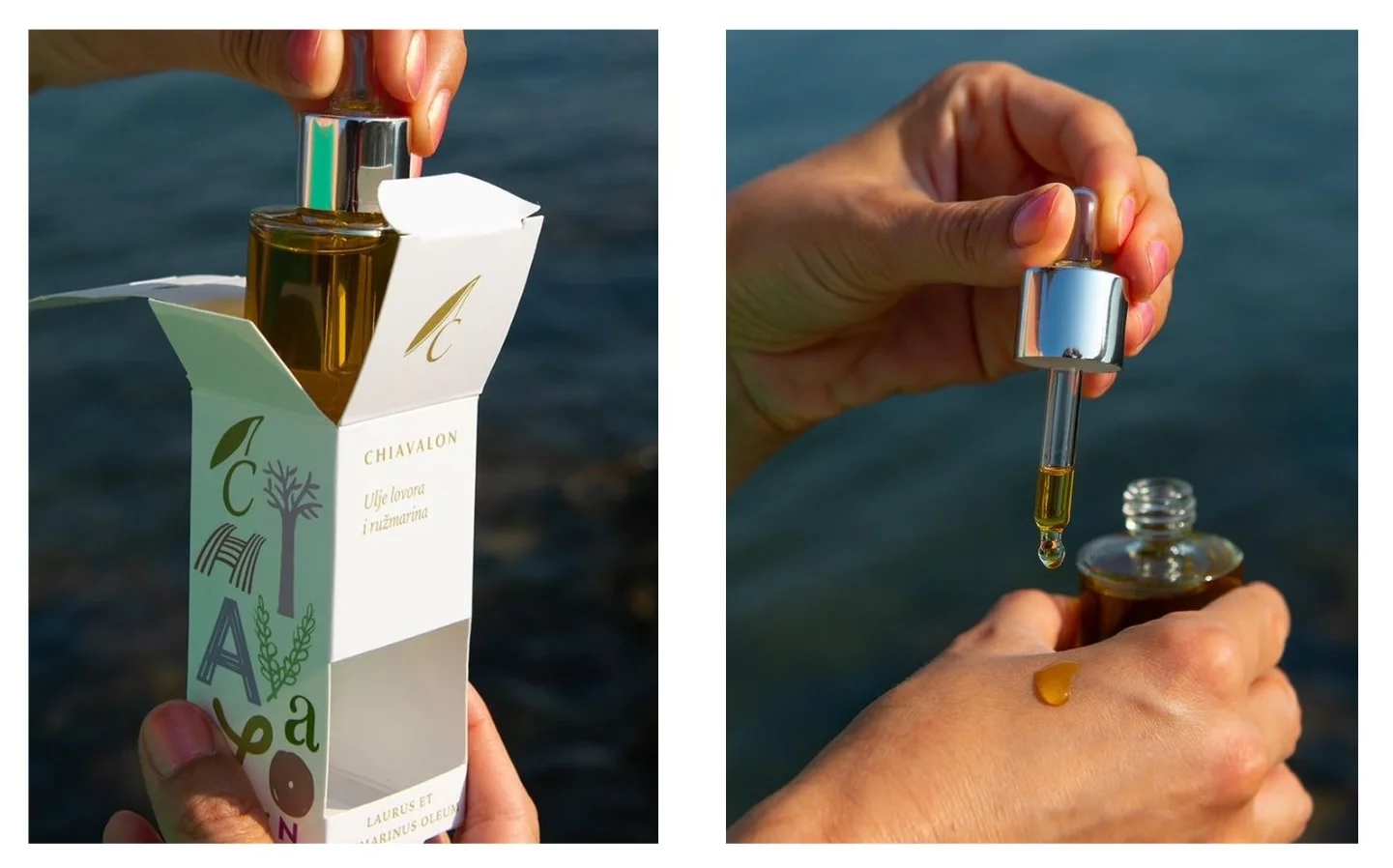
Bay leaf oil is not a common ingredient in facial creams and serums, but it holds great potential for skin revitalization. Rich in vitamins A and C, it stimulates cell regeneration. Its antimicrobial properties cleanse the skin and can prevent acne breakouts after summer. In addition to revitalizing skin, bay leaf oil is also beneficial for hair care, adding shine and softness. The base oil for bay leaf is olive oil, and we, of course, used Chiavalon extra virgin olive oil.

Rosemary Oil: Stimulating and refreshing

Rosemary oil boosts circulation and has diuretic properties that reduce puffiness around the eyes. It tones the skin, giving it a firmer and more radiant appearance. Besides facial care, rosemary oil is used to combat cellulite by stimulating the lymphatic system and promoting toxin removal. Its most popular use, however, is for hair growth, a major trend on TikTok. Dr. Shilpi Khetarpal from the Cleveland Clinic has explained the benefits of rosemary oil for hair health. Chiavalon combines rosemary and bay leaf oil for enhanced effects and easier application.

A Holistic Approach to skin hydration after summer

Combining natural oils creates a holistic approach to skincare, meeting multiple needs simultaneously. Extra virgin olive oil serves as the base, providing deep hydration and protection. St. John’s wort oil heals and soothes, bay leaf oil rejuvenates and revitalizes, and rosemary oil stimulates and tones. Together, these four precious oils can restore your skin’s balance and vitality after summer.

DIY Magic oil mix for the face

For those who enjoy natural cosmetics, creating a DIY facial oil is a simple way to provide your skin with the best of Mediterranean herbs.

Ingredients:

  • 1 tablespoon extra virgin olive oil
  • 1 teaspoon St. John’s wort oil
  • 10 drops bay leaf and rosemary oil

Instructions:

  1. Mix the oils in a small glass bottle
  2. Shake well to combine
  3. After your evening facial cleansing, apply 2-3 drops of the oil mixture to your fingertips
  4. Massage into the face and neck using upward circular motions
  5. Allow the oil to absorb before applying your moisturizer

Note:

If you have sensitive skin, test a small amount behind your ear and wait 24 hours before applying it to your entire face. The oil mix works best at night when the skin’s natural repair processes are most active. Remember to cleanse your skin thoroughly in the morning before sun exposure and always use sunscreen—your skin will thank you.

CONCLUSION

Hydrating your skin after summer goes beyond addressing immediate dryness or irritation; it involves protecting the overall health of all skin layers. By incorporating EVOO, St. John’s wort oil, bay leaf oil, and rosemary oil into your daily routine, you can effectively counteract the damaging effects of the summer months. These oils work synergistically to hydrate, heal, and revitalize your skin, providing a healthy, glowing complexion all year round.

A one-day guide to Istria for hedonists and romantics

When you have just one day to explore, and you want to make the most of it with captivating experiences, Terra Magica offers an endless source of inspiration. Today, we present a suggestion on how to indulge all your senses with the flavors, scents, and colors of Istria, collecting memories that will last a lifetime.

VODNJAN – Learn to taste olive oil

Vodnjan is an authentic gem that preserves the tradition of the Istrian way of life, blending it with modern times in a unique way. Its palaces and streets are rich with details from Gothic, Venetian, Renaissance, and Baroque styles, along with beautiful churches and monuments that coexist with a vibrant street art scene and impressive murals on facades. Beyond its rich history, Vodnjan is renowned for its production of extra virgin olive oil.

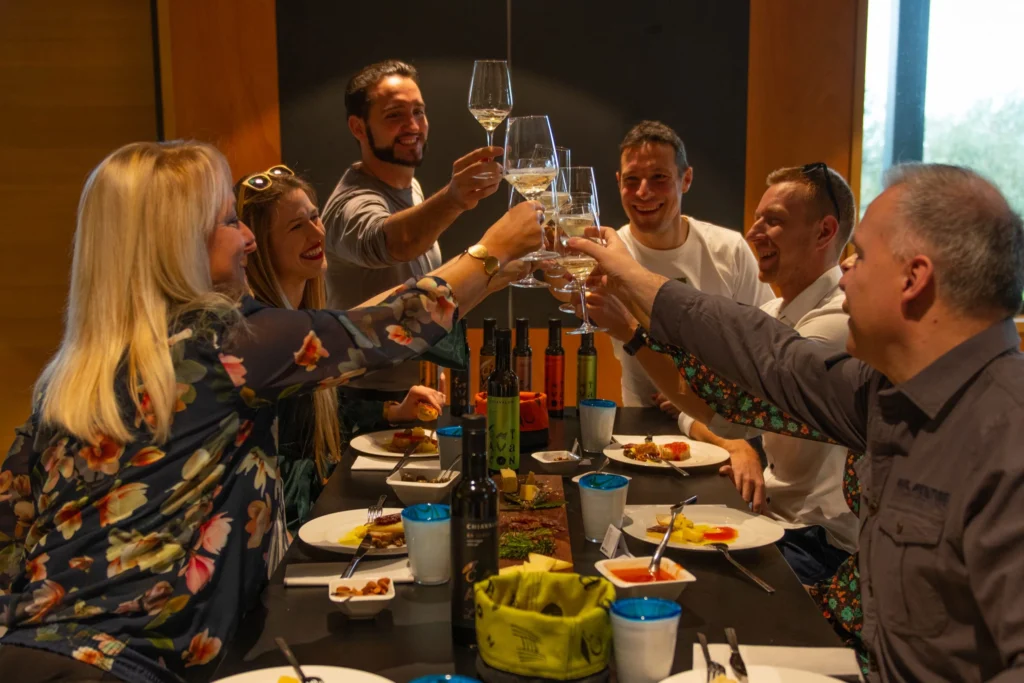
OPG Chiavalon in Vodnjan is the most awarded producer of extra virgin olive oil in Croatia, and their Ex Albis oil is ranked among the top 25 organic extra virgin olive oils in the world. Join a guided tour of the estate, where you’ll walk through olive groves overlooking the Brijuni Islands, and learn about the cultivation and production techniques. In the tasting room inside the modern olive mill, you’ll discover how to properly taste and recognize authentic extra virgin olive oil. After sharpening your palate, treat yourself to a selection of Istrian tapas and wines. Choose your unique tasting experience here.

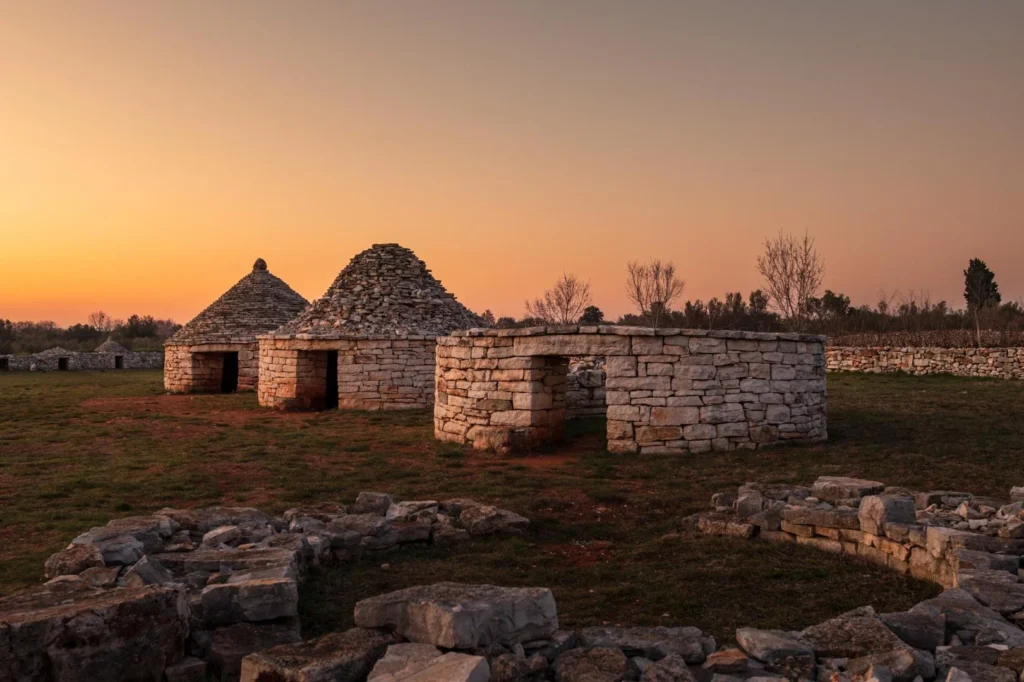
Before leaving Vodnjan, take a look at the Park of Kažun, an open-air museum showcasing the Istrian tradition of dry-stone construction used for shepherds’ and farmers’ shelters during bad weather.

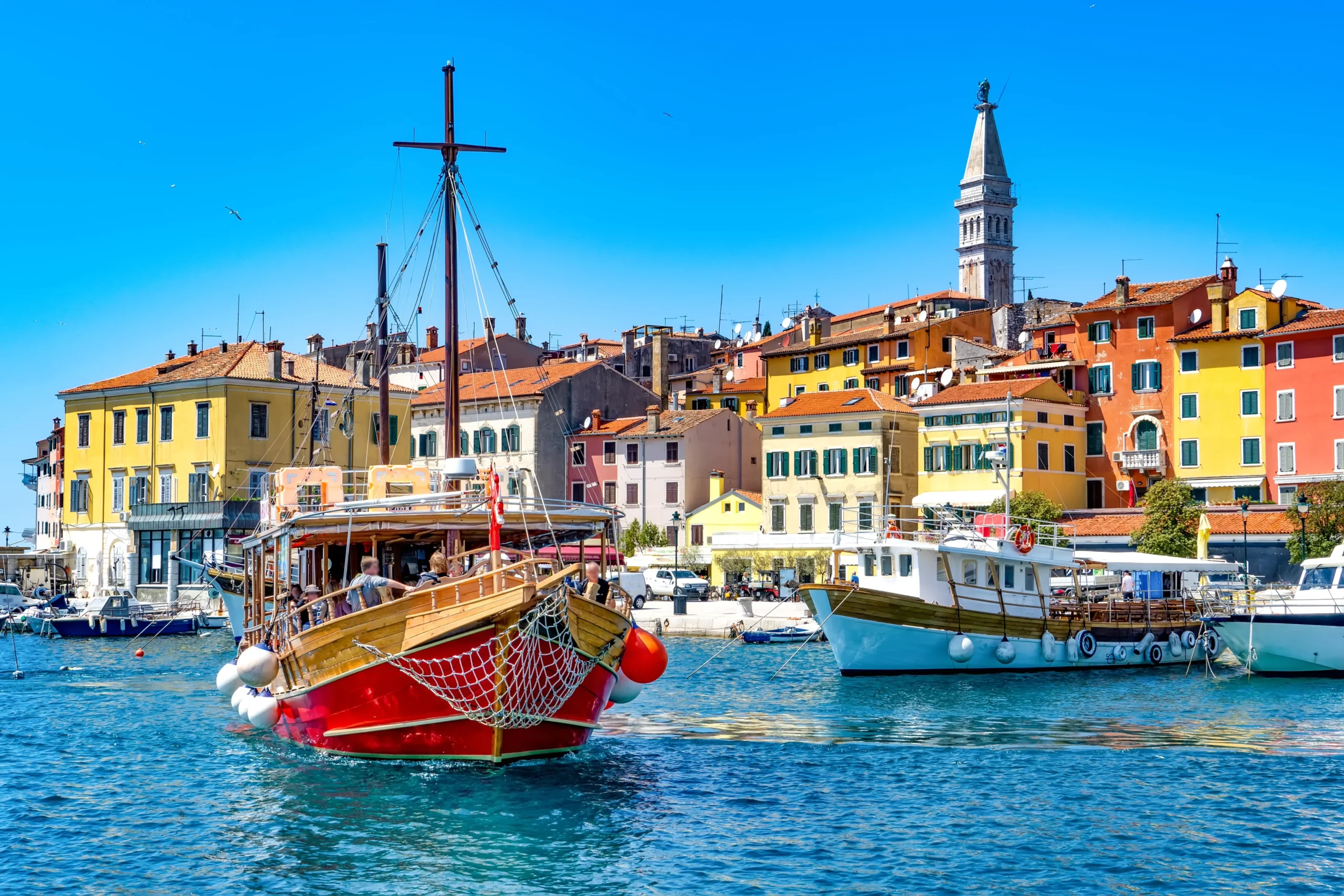
Just a 20-minute drive away is your next destination, the most romantic corner of Istria – Rovinj.

ROVINJ – Fall in love at first sight

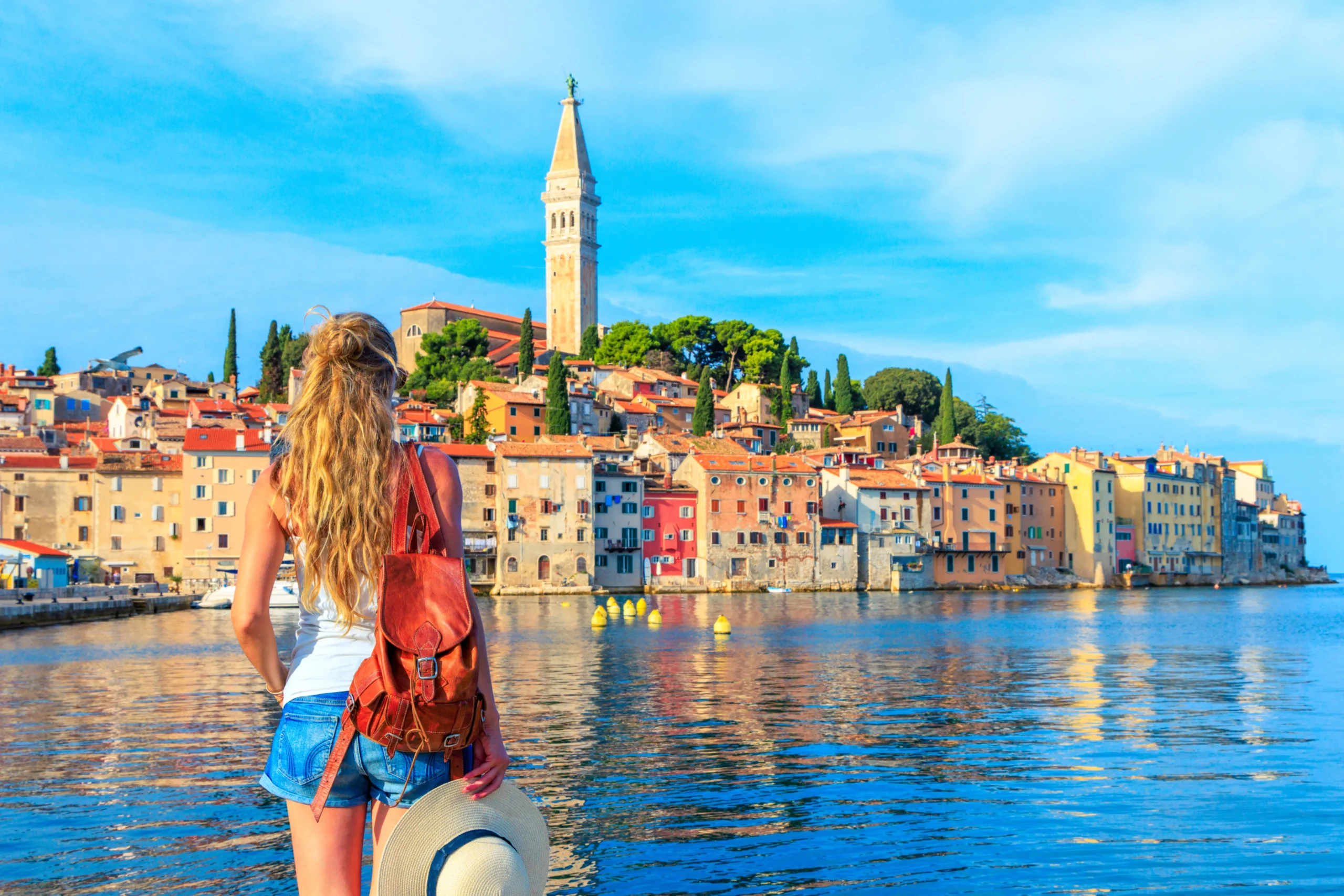
There aren’t many places where beauty leaves you breathless, and Rovinj is certainly one of them. Take your time to simply stand and admire this picturesque town on a peninsula, surrounded by the sea, boats, and a small archipelago of islands. Colorful facades, winding cobblestone streets, houses that touch the sea, and the dominant bell tower of St. Euphemia’s Church at the top create a postcard-perfect scene. Explore the old town, its galleries, souvenir shops, and charming cafes. The view from the Baroque bell tower, topped by a statue of the saint indicating the wind direction, is nothing short of spectacular. On clear days, you can even see the Alps.

Once you’ve soaked in the vibrant atmosphere of the old town, head to one of Rovinj’s beaches. The Golden Cape Forest Park, or Punta Corrente, is only a 15-minute walk from the center and offers a cool retreat in a forest oasis of cypress, pine, and Himalayan cedar trees. You can walk, bike, try free climbing, or simply dive into the blue sea and relax. The rocky beaches are ideal for quiet relaxation, while pebbled coves are perfect for families with children. As the sun begins to set, drive north to Višnjan, about a 40-minute ride away. On the way, you can explore the unique Lim Channel and taste fresh shellfish directly from the sea. Learn more here.

VIŠNJAN – Gaze at the Starry Sky

In the ancient town of Višnjan, you can meet some of the world’s most successful asteroid hunters. In terms of the number of potentially dangerous objects discovered near Earth, the Višnjan Observatory stands alongside NASA. This alone is a great reason to end your magical Istrian journey here, where gazing at the starry sky lets you touch your dreams.

During the summer season, astrotourism programs are organized for visitors, including lectures, tours of the observatory and the main telescope dome, and stargazing when weather permits. The stargazing experience concludes with guided constellation observation aided by a laser. The Astro Night program begins in the evening, with sessions available in Croatian on some days and in English on others. Check the exact schedule here.

Challenges and Educating Children about Nutrition, Meal Planning from Nastasja Petrić’s Perspective

We talked to Nastasja Petrić about maintaining a balanced diet for every family member. How to plan meals to maximize nutritional value without spending half the day in the kitchen, how to instill good habits in children, and her recommendation for a quick summer recipe that anyone can easily prepare in their kitchen. Read on to find out more.

What do you see as the biggest challenges in maintaining a balanced diet for children, and how do you handle these challenges?

“I think it’s not talked about enough because many people idealize parenthood, but to start with, I think the biggest challenge is to cook quality meals for the whole family every day. People work long hours, commute to and from work for unrealistically long times, come home tired, and then still have to cook a meal for the family, often for the next day as well. That’s why I believe it’s easier for people to reach for semi-finished products and deliveries because fatigue takes its toll, and kids are always hungry and craving something. So, kudos to everyone who fulfills this daily task because even as a chef, I sometimes find it very exhausting. That’s why I think we should occasionally make this part of parenting easier for ourselves in one way or another.”

How do you educate your children about nutrition and healthy eating habits? Are there specific approaches or activities that you find effective?

“Involving children in cooking whenever possible, that is, whenever you have the will for it, going to markets and stores together, and talking about food, differences, cultivation, origins. A relaxed approach to feeding works only if you are aware of how certain foods affect the body, so it’s wise to explain to a child that it’s perfectly okay to eat a chocolate bar, but if we overdo it, our body will feel strange, and that awareness is needed. We can overdo it with apples, of course, but making a child aware of how their body reacts to certain foods is the first step toward a better relationship with food. Physical activity as the foundation of everyday life and enough sleep and rest. Children naturally know how to live healthily, but we can spoil it with our wrong approach.”

How do you balance the nutritional needs of your children in their daily meals, especially considering different ages or developmental stages?

“When they say they’ve had enough during a meal, I don’t insist on another spoonful or extra bite because I think it’s necessary. I firmly believe they know best when they’ve had enough. Sometimes it can be challenging if a child saves themselves for sweets or foods they like more, not eating the meal we’ve prepared, but these are normal parenting challenges, and there are ways to get through them. Certainly not by force. But a balance between family table rules and children’s desires is necessary. There’s no magical formula; everyone knows where their limit is for themselves and their children.”

MEAL PLANNING STRATEGIES

What strategies do you use in meal planning to ensure a balanced diet for your family? How do you reconcile preferences with nutritional requirements?

“I always have ingredients at home for 15-minute meals. This is my personal trick because it often happens that I don’t feel like cooking, but I don’t want them to eat something unhealthy, so I’m at least sure I have 4-5 ingredients for such meals at home. The best example is creamy pasta with vegetables. While the pasta is cooking, I prepare the vegetables or just take peas or similar from the freezer and add them to the pasta for the last two minutes. I drain and mix the ingredients with something creamy like mascarpone or sour cream, season with garlic and oregano, and serve with Parmesan. The fastest meal most kids love, and it takes a maximum of 15 minutes to prepare.”

What advice would you give to parents struggling to prepare balanced, nutritious meals for their children despite a busy schedule?

“There are several Instagram profiles that deal with this topic, which is fortunate because when my girls were little, I was the only one covering this topic. So I can freely call my girls guinea pigs, as I regularly shared everything I learned and achieved with them on my profile. We all learned together, and now there are people who professionally deal with this and help parents who get stuck when baby weaning starts, especially when the first challenges in the toddler phase begin. My advice would be to arm yourself with patience, surround yourself with people who share the same or similar philosophy about food, follow recipes that are closest to your preferences, and try to be as relaxed as possible in this seemingly tedious process, not fearing food and hunger, because that’s when beginner mistakes in meal preparation for children and families usually happen.”

Nastasja Petrić’s Recipe Choice

Especially in the summer months, homemade salsa and sataraš are indispensable parts of her kitchen. These recipes are extremely versatile and can be used as a sauce for pasta, rice, a base for meat dishes, or an addition to eggs or toasted bread. One of the secrets of her recipes is oven preparation, which makes the process easier and allows for richer flavor.

Oven-Baked Sataraš

Ingredients:

  • 3 large peppers
  • 1 large onion
  • 8 medium tomatoes
  • 5 cloves of garlic
  • 1 teaspoon of sugar
  • 1 heaping teaspoon of salt
  • 1 teaspoon of oregano
  • A little pepper
  • A generous amount of extra virgin olive oil

Preparation:

  1. You can cut the vegetables into large or small pieces.
  2. Mix all the ingredients well on a wide and deep baking tray.
  3. Bake at 200°C for about 45-50 minutes. Stir the vegetables a bit after half the time has passed.
  4. The sataraš is done when the excess liquid from the tomatoes has evaporated, and all the vegetables are completely softened.
  5. Serve it immediately or after it cools down. Sataraš can also be frozen.
  6. If your children don’t like large pieces, feel free to blend the sataraš a bit and serve it as a sauce for pasta.
  7. Optionally, add fresh basil leaves.

In conclusion, olive oil plays a crucial role in Nastasja Petrić’s kitchen, not only for its health benefits but also for its ability to enhance the flavor of every dish. Its presence in everyday meals, whether used raw or for cooking, makes it an indispensable part of her culinary philosophy. Nastasja believes that high-quality extra virgin olive oil can elevate any dish, making it the perfect seasoning in the kitchen.

0
    0
    Cart
    Cart is emptyU trgovinu