Alla Beccaccia: idealna destinacija za ljubitelje mesa

In Valbandon, nestled between the scent of sea salt and the greenery of Istria, behind stone walls that remember more than people do, you’ll find Konoba Alla Beccaccia. The name comes from the woodcock – Beccaccia in Italian – a prized game bird among hunters. It’s not a coincidence. Here, everything has its reason – and even more so, its soul.

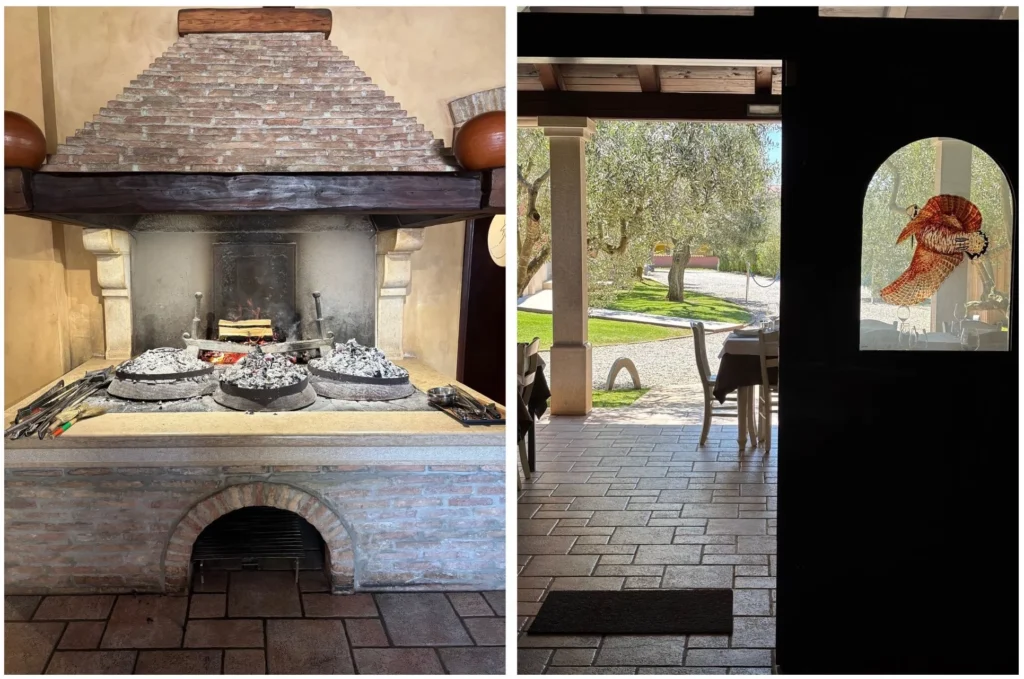
Pino, the founder and a passionate woodcock hunter, built the heart of the house – a massive open fireplace. Its embers crackle day and night, fueling slow roasts and traditional clay-pot cooking. Though a new generation now gathers around it, the rhythm of the fire still sets the pace – for mornings, noons, and long evenings.

Today, the tavern is run by Ivor and Annamaria.
He is the host – calm, grounded, and a hunter like his predecessor.
She is the chef – a bold, creative soul with a clear vision. Her kitchen is her kingdom. Herbs and spices are her language. Every dish that passes through her hands must tell a story – with balance, emotion, and edge. Sweet, sour, bitter, salty – there’s a small revolution in every plate.
She doesn’t create dishes on demand – she plays, she experiments, she waits for inspiration. The team follows.

In the courtyard: stone, shade, and quiet greenery.
Inside: warmth from wood and flame.
Not luxury – but comfort, honesty, permanence. Just as they imagined it.

For 25 years, Alla Beccaccia has welcomed guests; this is Ivor and Annamaria’s third season at the helm.

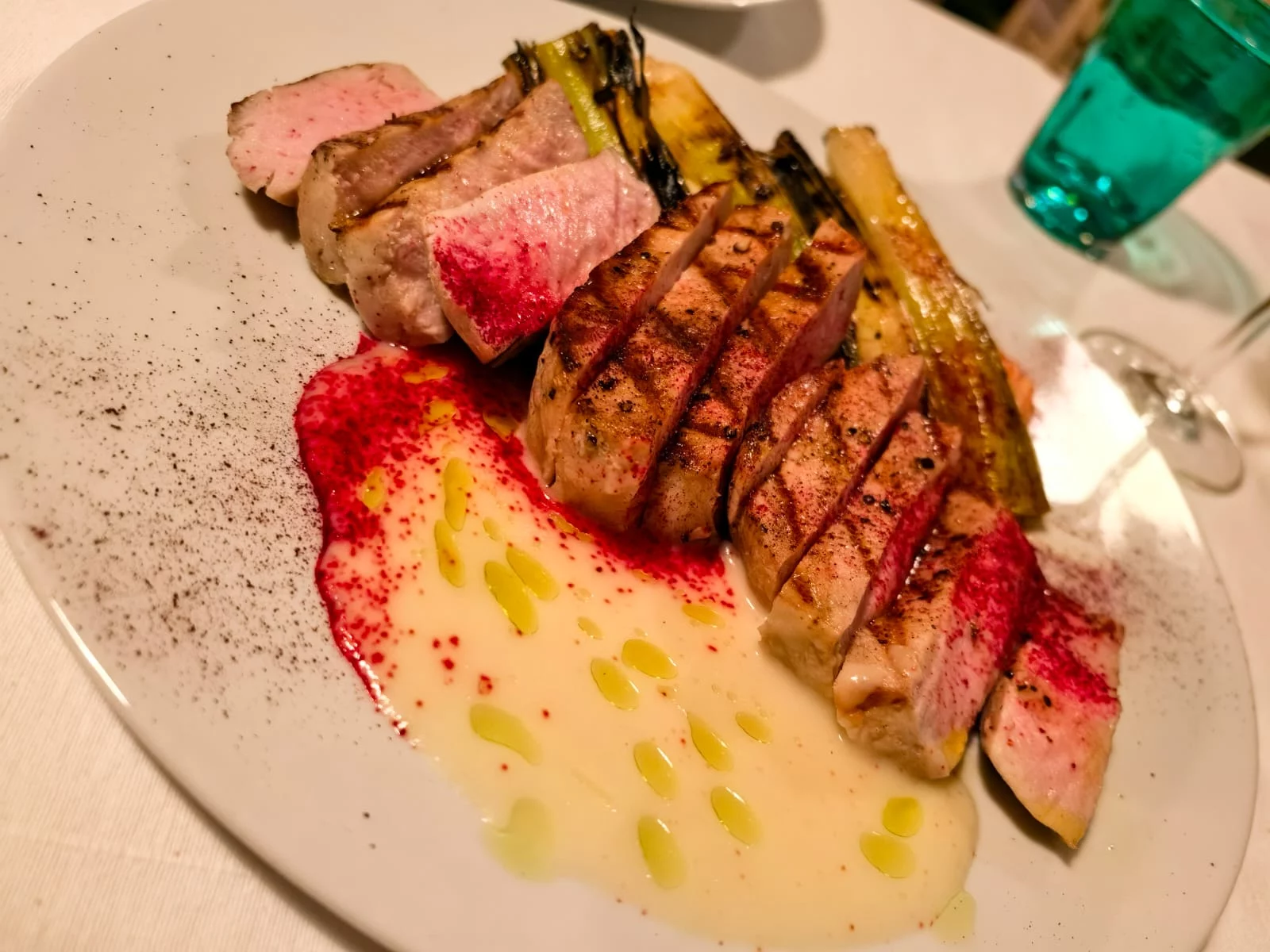
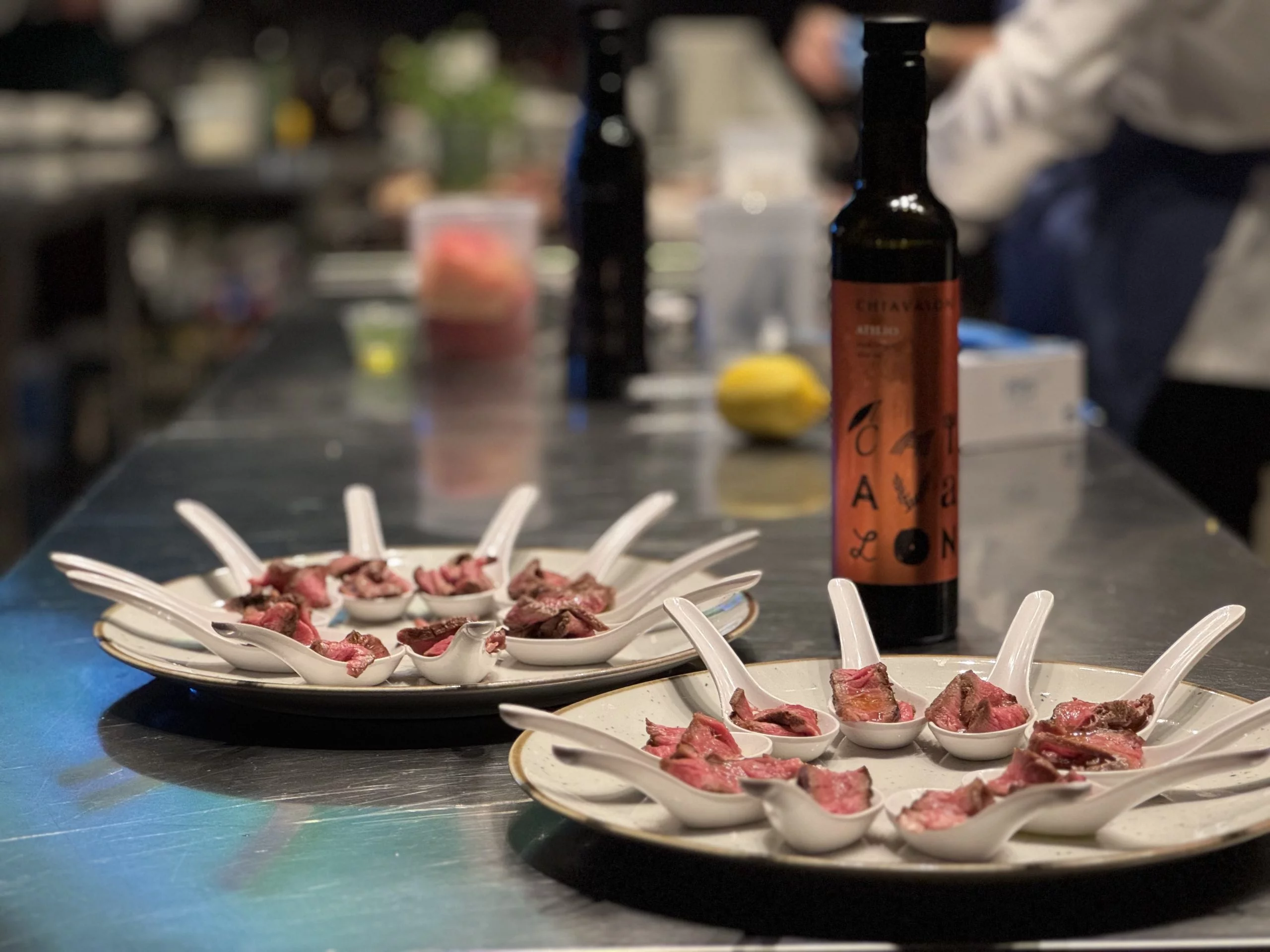
Here, meat takes center stage. It’s not hidden or masked – it’s celebrated and elevated. Guests don’t come for “a bit of everything”, they come for the best of one thing. Annamaria and Ivor strive to be recognized for the way they prepare and present meat. The menu isn’t printed in advance – it listens to the seasons, the land, and local producers.
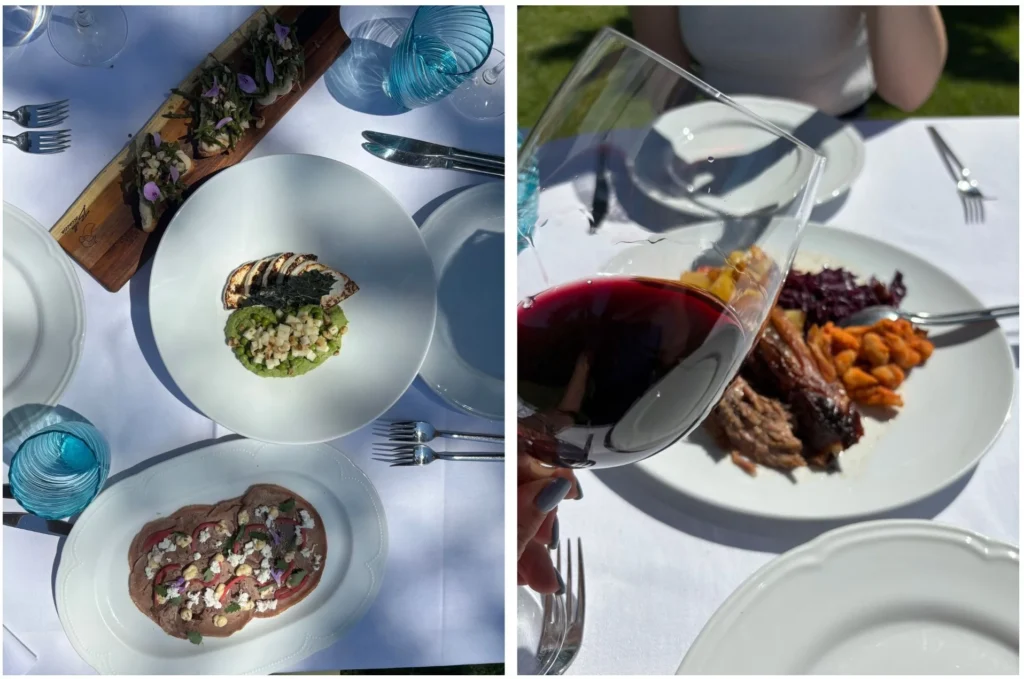
If peas and radishes are ripe today, they’re on the menu. Tomorrow, it might be cabbage or artichokes. Vegetables are both a challenge and a passion. They talk about how they’d love to see more variety in the market – there are yellow, white, even purple carrots, not just orange ones. There are over 15,000 types of potatoes in the world – and yet, “Everyone has their own potato guy,” they joke.

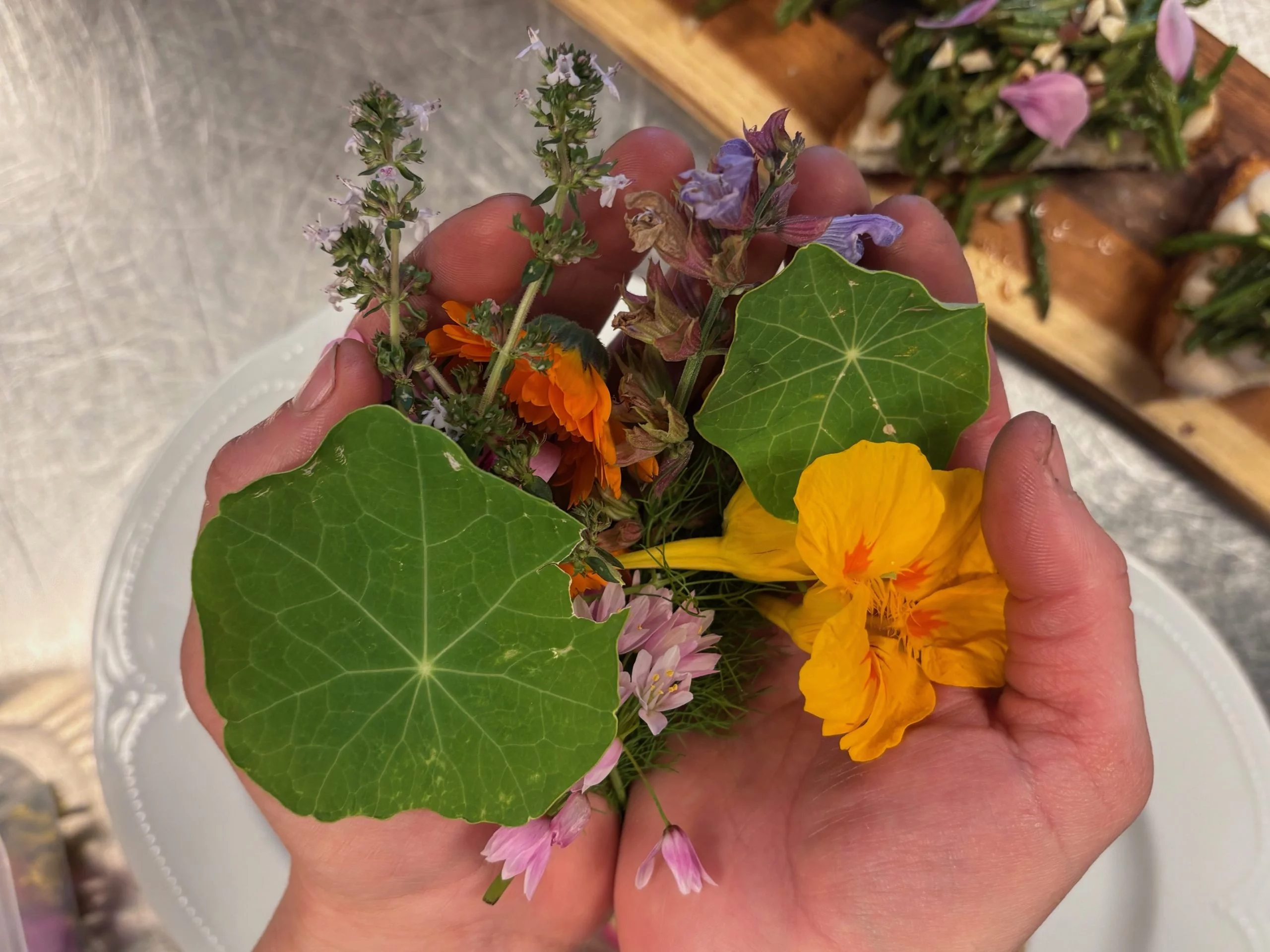
Annamaria grows her own herbs: calendula, borage, citrus thyme, tarragon. Wild garlic and its flower appear often on the plate. From nearby farmers, they source peas, cabbage, radishes – but she always wants more. More local. More fresh. More diversity. They currently rely on organic, local producers, but in peak season, supply can’t always meet demand. You need a “guy” for every fresh ingredient – eggs, chickens, herbs – and a spot on the waiting list.

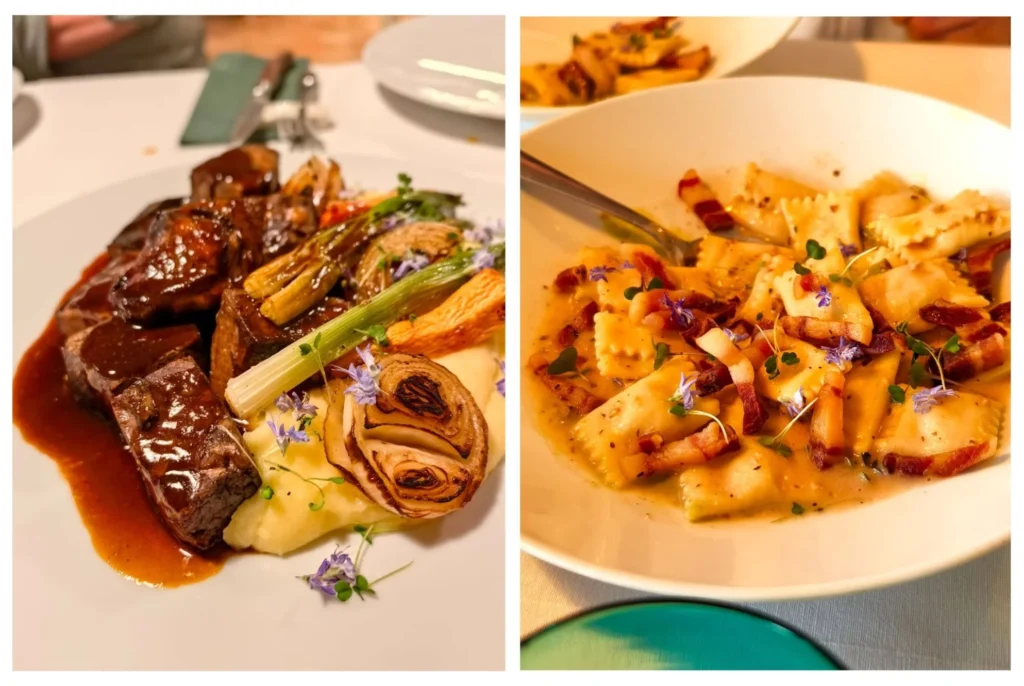
In the kitchen, nothing is by chance. Inspiration comes from old notebooks, traditional recipes of Lukez and Orlić. Every day, three clay pots take their place in the fireplace – veal shank, shoulder, and young cockerels. Want lamb in a pot? You’ll get it – with a hint of cinnamon, familiar yet unpredictable.

They bake their own bread, daily – from traditional white loaves to walnut sourdough.
Pasta? Handmade. Corsetti with their own stamp, pasutice, pljukanci.
Sauces? Marjoram pesto, goat cheese and cabbage, mushrooms and asparagus.
Traditional, with a twist. A flower here. A wild herb there.
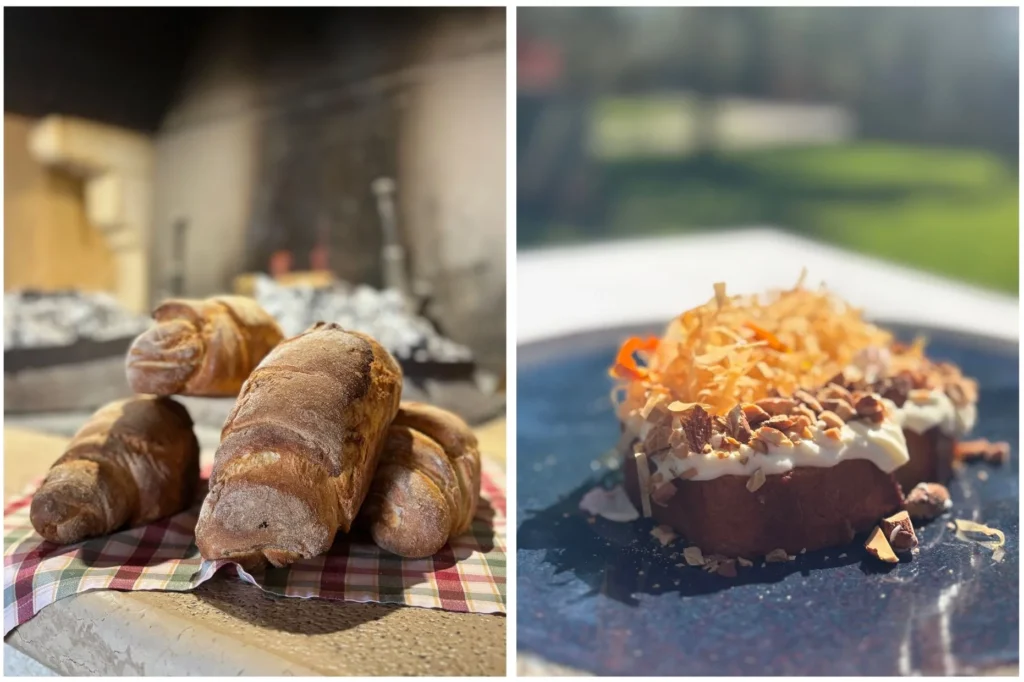
Desserts are a chapter of their own.
Simple doughs with unexpected textures – lemon sponge, white chocolate cream, paper-thin pastry chips. And yes, even desserts kissed with extra virgin olive oil.

Which brings us to their longtime partner and friend: Chiavalon olive oil. From artichokes to flour to friendships – everything blends like the perfect recipe.

Alla Beccaccia is not a tourist gimmick. Sure, a lot of tourists return year after year – but it’s the locals who carry the story forward. The ones who understand. The ones who come back.

Annamaria, who trained in South Tyrol, says people there are proud of their land and what it gives them. They live in true symbiosis. She wants that here. In Istria. In her tavern. That’s why you’ll often find a fig or olive leaf in her hands. That’s why she still turns the embers under her clay pots, every day.

So if you’re curious to hear the fire crackle, or searching for a shady corner to enjoy a perfect piece of meat with a glass of wine, we can only say – go find this tavern. You won’t be dissapionted.
Treasures of the Northern Adriatic: Fish, Pristine Sea, and Mediterranean Cuisine

The northern Adriatic, encompassing the coasts of Istria and Kvarner, stands as one of the richest and best-preserved marine areas in the Mediterranean. Its biodiversity, crystal-clear waters, and the traditional lifestyle of local communities make this region an exemplary model of sustainable coexistence between humans and nature.

A Sea that Nourishes and Inspires

In June, as sea temperatures rise, marine life flourishes. This period is ideal for fishing and savoring fresh, locally caught fish that form the cornerstone of Istrian and Kvarner cuisine.

Among the most common and esteemed fish species caught and consumed in June are:

  • Gilt-head bream (orada) – the queen of the Mediterranean plate, often grilled.
  • European sea bass (brancin) – light and tender, perfect for baking in salt or olive oil.
  • Common pandora (pagar) – meaty white fish, excellent for brodetto.
  • White seabream and annular seabream (fratar and šarag) – smaller fish with intense flavor, ideal for soups or boiling.
  • Mackerel and chub mackerel (skuša and lokarda) – oily, blue fish rich in omega-3 fatty acids.
  • Mullet (cipal) – typical of estuaries and harbors, delicious when baked with aromatic herbs.
  • Sardines and anchovies (srdela and inćun) – staples of the fisherman’s diet, often served marinated or grilled.

Mediterranean Diet: More Than Just Food

Recognized by UNESCO as an intangible cultural heritage, the Mediterranean diet is based on fresh fish, olive oil, vegetables, legumes, and fresh herbs. Its value lies not only in taste but also in health benefits—numerous studies link it to reduced risk of cardiovascular diseases, better blood sugar control, and longevity.

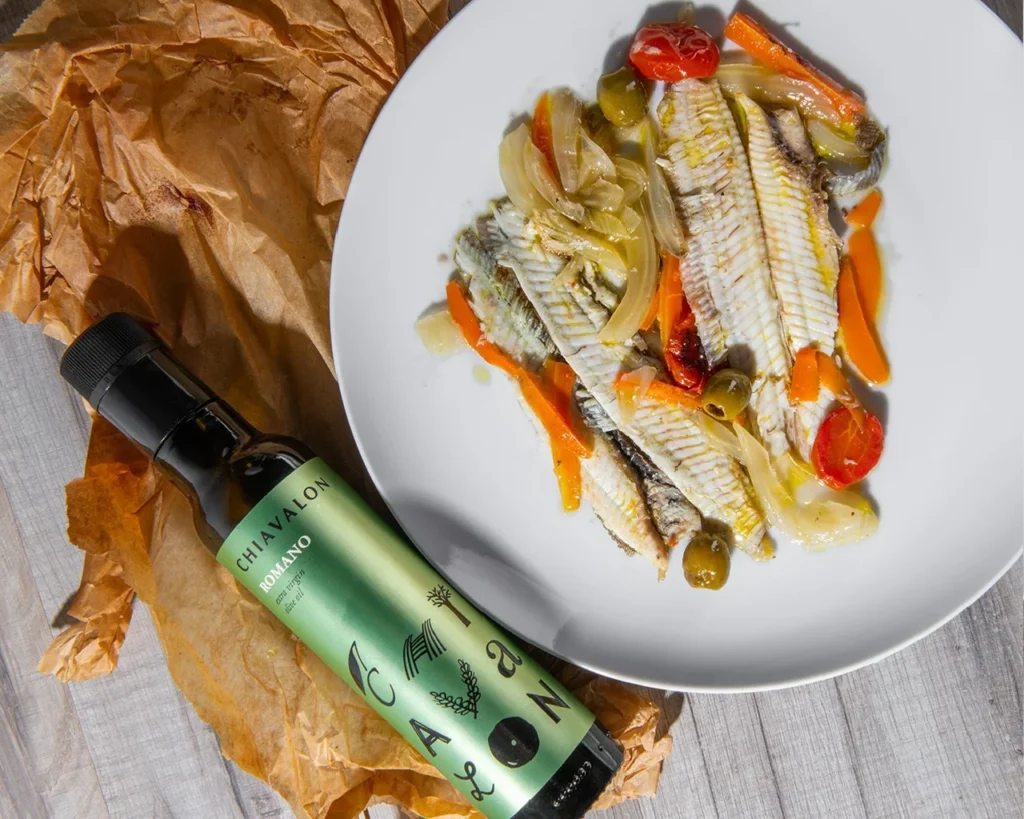
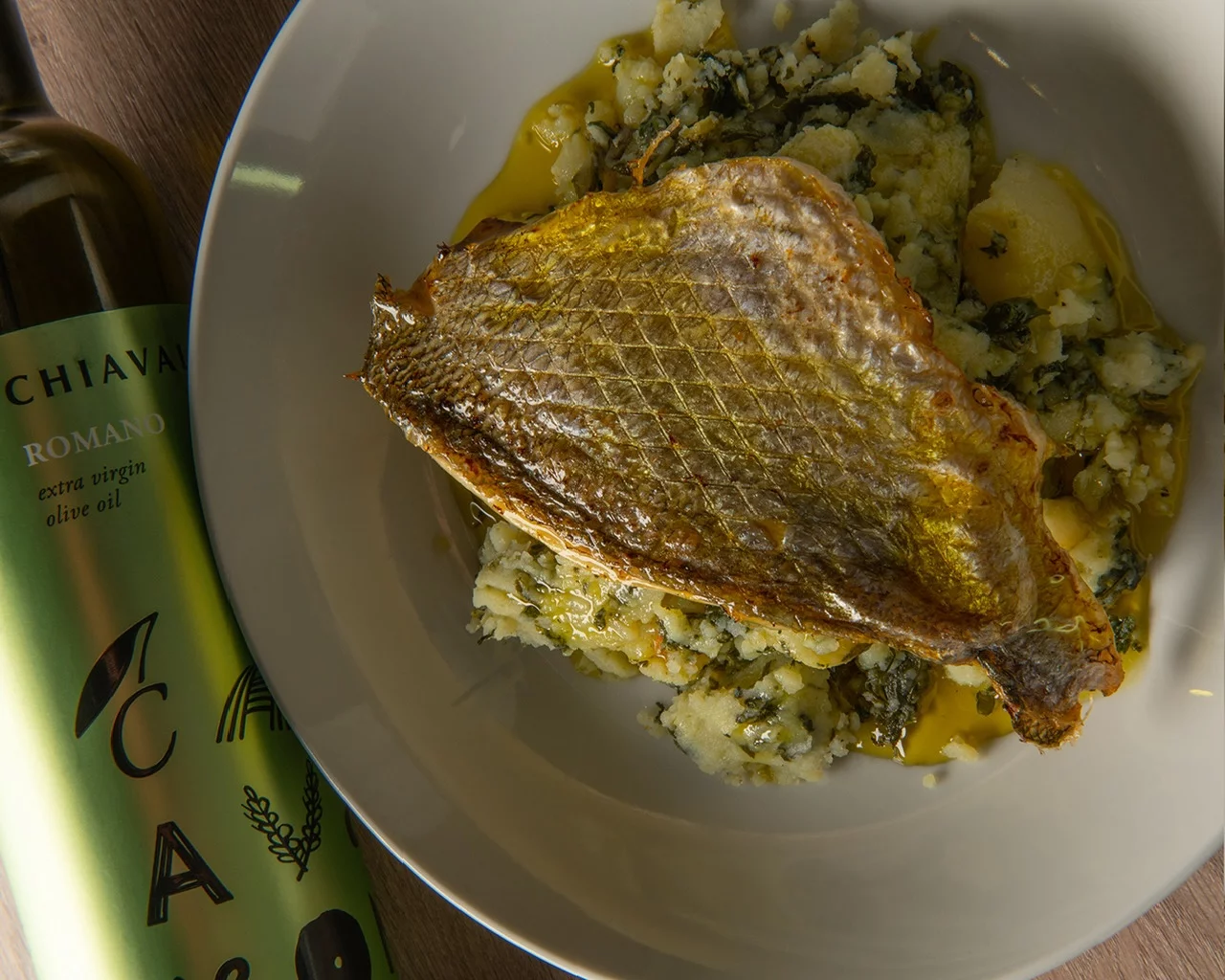
A key component is extra virgin olive oil, which in Istria often comes from family-run oil mills like Romano oil ideal for fish dishes due to its freshness, fruitiness, and mild spiciness.

Recipe: Sea Bream Fillet in Lemon and Romano Olive Oil Emulsion

Ingredients (for 2 people):

  • 2 fresh sea bream fillets
  • 4 tablespoons Romano extra virgin olive oil
  • 1 untreated lemon (juice and zest)
  • Fresh parsley
  • A pinch of coarse sea salt
  • Whole black peppercorns
  • Seasonal vegetables (zucchini, Swiss chard, new potatoes) 

Preparation:

  1. Lightly salt the sea bream fillets and let them rest at room temperature for 15 minutes.
  2. In a pan with a few drops of Romano oil, briefly sear the fillets on both sides (about 2–3 minutes).
  3. In a small bowl, whisk together olive oil, lemon juice, grated lemon zest, finely chopped parsley, and freshly ground pepper to create a light emulsion.
  4. Steam the vegetables and drizzle them with the remaining emulsion.
  5. Serve the sea bream fillet on a bed of vegetables, topped with the aromatic emulsion.

This dish exemplifies Mediterranean simplicity—three basic ingredients (fish, oil, lemon) create a complex yet light meal.

Preserving Marine Life—A Responsibility for All

The northern Adriatic is renowned for its cleanliness and abundance, necessitating careful management. Sustainable fishing, education of local communities and tourists, and respect for marine reserves are crucial for preserving this ecosystem.

Increasing initiatives support marine conservation, including local cleanup actions and the promotion of sustainable dietary habits—choosing local fish over imported species, avoiding overfishing, and educating children about the importance of the sea.

The northern Adriatic is not just a destination—it’s a way of life. Amidst olive trees, pristine sea, and simple cuisine lies a wealth measured not only in flavors but also in tradition, health, and harmony with nature.

Next time you smell the sea and hear cicadas in the shade of olive trees, know that you’re in the right place. For a complete experience, let your plate be filled with fresh fish and Romano olive oil.

World Environment Day: How Our Olive Becomes Energy, Compost, and Fire

At Chiavalon, we believe that true sustainability doesn’t begin when you enter the market — it begins where others stop.

From day one, our focus hasn’t been just on producing premium olive oil, but on how we produce it. We wanted to build a system that respects the rhythms of nature, uses what we already have, and gives back to the earth at least as much as we take. And so today, on World Environment Day, we want to shed light on everything we do — behind the scenes.

From Filter to Flame

For us, zero waste doesn’t begin with recycling — it begins with upcycling.

We use 100% cellulose filters to filter our olive oil. Once used, they are no longer suitable for production. But instead of discarding them, we give them a second life. We dry, pack, and transform them into organic fire starters — eco-friendly kindling used to light fireplaces or grills. The used filter, rich with the essence and aroma of the oil, gains new purpose.

The Olive Pit as Local Energy

During processing, we extract the woody pit from the olive — a core quite literally filled with energy. As the pit is soaked in natural olive liquids, its energy value is remarkably high.

We don’t discard this pit. Instead, we use it as fuel to heat our facilities, offices, and production buildings. But we go further — more than 40 households in the Vodnjan area heat their homes with this local, renewable, and sustainable energy, eliminating the need for industrial pellets.

Compost That Feeds Future Olives

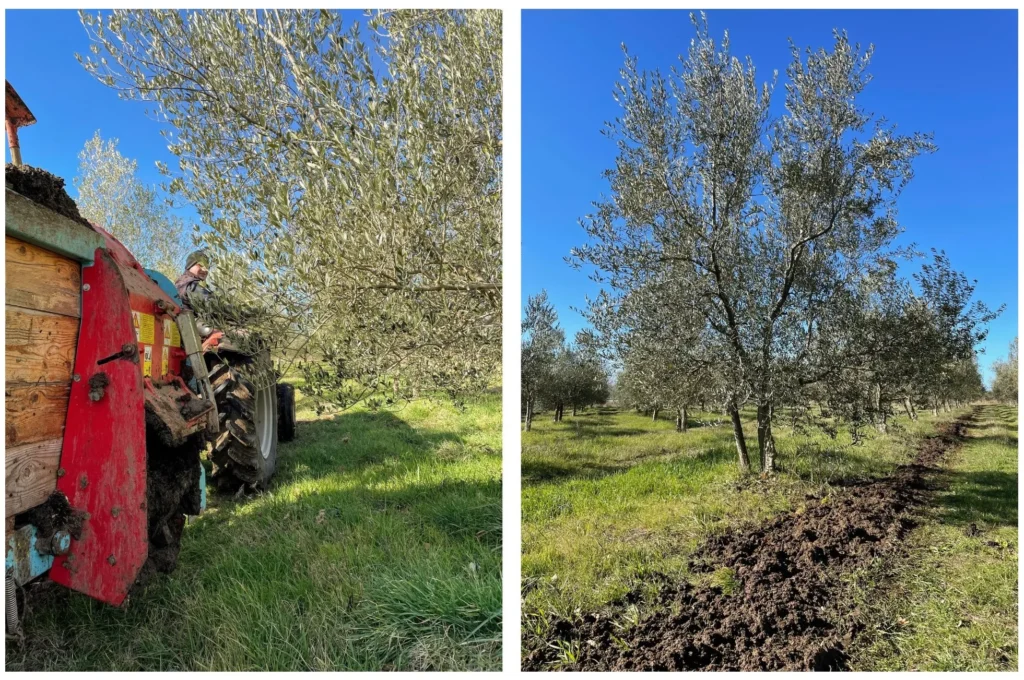
After processing, we’re left with pomace — a rich, thick paste often seen as waste. To us, it’s a raw material for high-quality compost. We compost it for over a year, after which we return this organic matter to our olive groves. In this way, the soil isn’t depleted — it’s enriched and nourished by what came from it.

Branches, Leaves, and the Cycle of Life in the Olive Grove

Our groves are alive year-round — but especially in spring, when we prune. This generates a large amount of branches and leaves, which we don’t discard. A special machine collects and shreds the plant material, which we then send for composting. After 1–2 years, this natural matter is returned to the earth as nutrients for new fruit.

No Waste, Only New Beginnings

For us, the olive is not just a fruit — it’s a circular system. From oil on your plate, to warmth in your home, to the soil beneath your feet — everything is reused, everything returns.

Sustainability is not a marketing slogan. It’s a daily commitment. That’s why we’ll keep looking at the olive from every angle — because we know that what seems like waste today, can be a resource tomorrow.

Happy World Environment Day — from the Chiavalon family.

Badi – Tradition. Innovation. Family. All served on one plate.

In a small village near Umag, in the northwest of Istria, lies Restaurant Badi – a symbol of family dedication, culinary creativity, and unforgettable hospitality. With nearly four decades of existence, one family name and countless stories are woven into this small but heartfelt restaurant. It all started with a father – and today, the story continues with his son, Ivan Badurina, who carries the same passion, warmth, and knowledge he began absorbing as a child.

“I started helping out in the restaurant when I was twelve. My father showed me how to be a host, and even though I once said I wouldn’t be like him – always present and hands-on – I ended up doing exactly that.”

Roots in tradition – steps forward

Badi is not a restaurant that seeks to expand, but one that focuses on quality. With around thirty seats, Ivan says that’s more than enough:

“We’re not after quantity, we want quality. Every plate that leaves the kitchen needs to be exactly as we envisioned.”

Ivan’s father opened the restaurant with a vision – to offer something different and more creative than the typical cuisine of the time. He was a pioneer, often ahead of his time: fish baked in bread, various types of brodetto, and themed dinners like Greek nights.

“I remember evenings when you couldn’t even see the floor because of all the broken plates. Dad really knew how to entertain!”

A kitchen inspired by the seasons and terroir

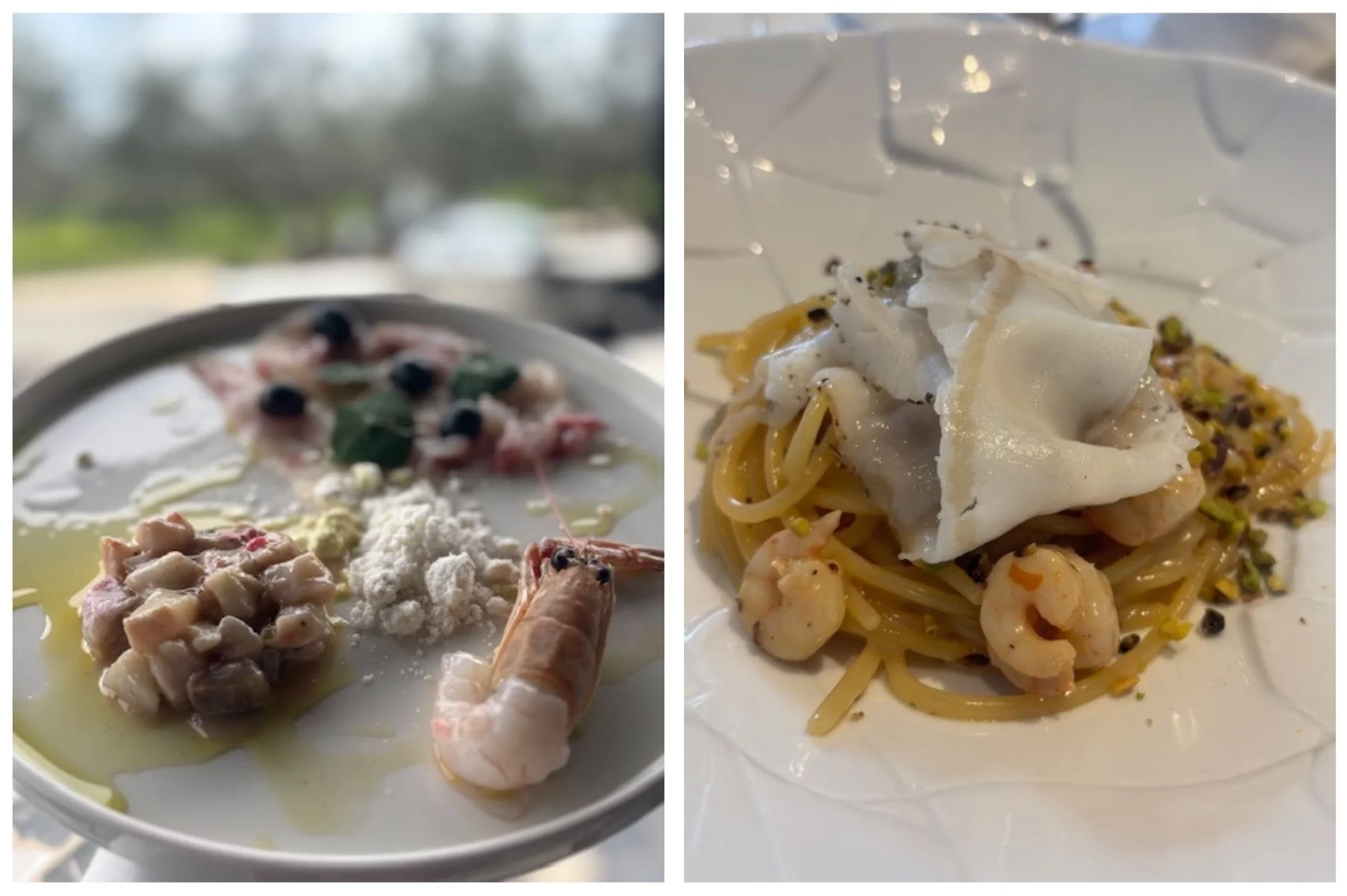
Today, Ivan runs the restaurant with his wife. Lahorka has been the head of the kitchen for 15 years, and in recent years, Nikola has joined her. The menu is divided between an à la carte offering – featuring long-time favorites like the legendary spaghetti with lardo and pistachios (the best-selling dish for the past 15 years) – and a seasonal tasting menu, which changes three times a year.

At Badi, everything revolves around ingredients. Fish comes from Istria and Kvarner, vegetables from the Umag market and local farmers. While speaking with Ivan, a man walks in carrying live lobsters – today’s delivery of freshness.

“I have a guy for asparagus, for everything. Until July 1st, we get plenty. After that, we start struggling with shortages. Prices have gone wild since COVID and the war in Ukraine. Maintaining quality has become a real challenge.”

JRE – A family with the same heartbeat

Since 2016, Badi has been a proud member of the prestigious JRE (Jeunes Restaurateurs) association.

“It’s an honor, a responsibility, but also a joy. These are people who exchange ideas, knowledge, chefs… It’s a family where everyone supports one another.”

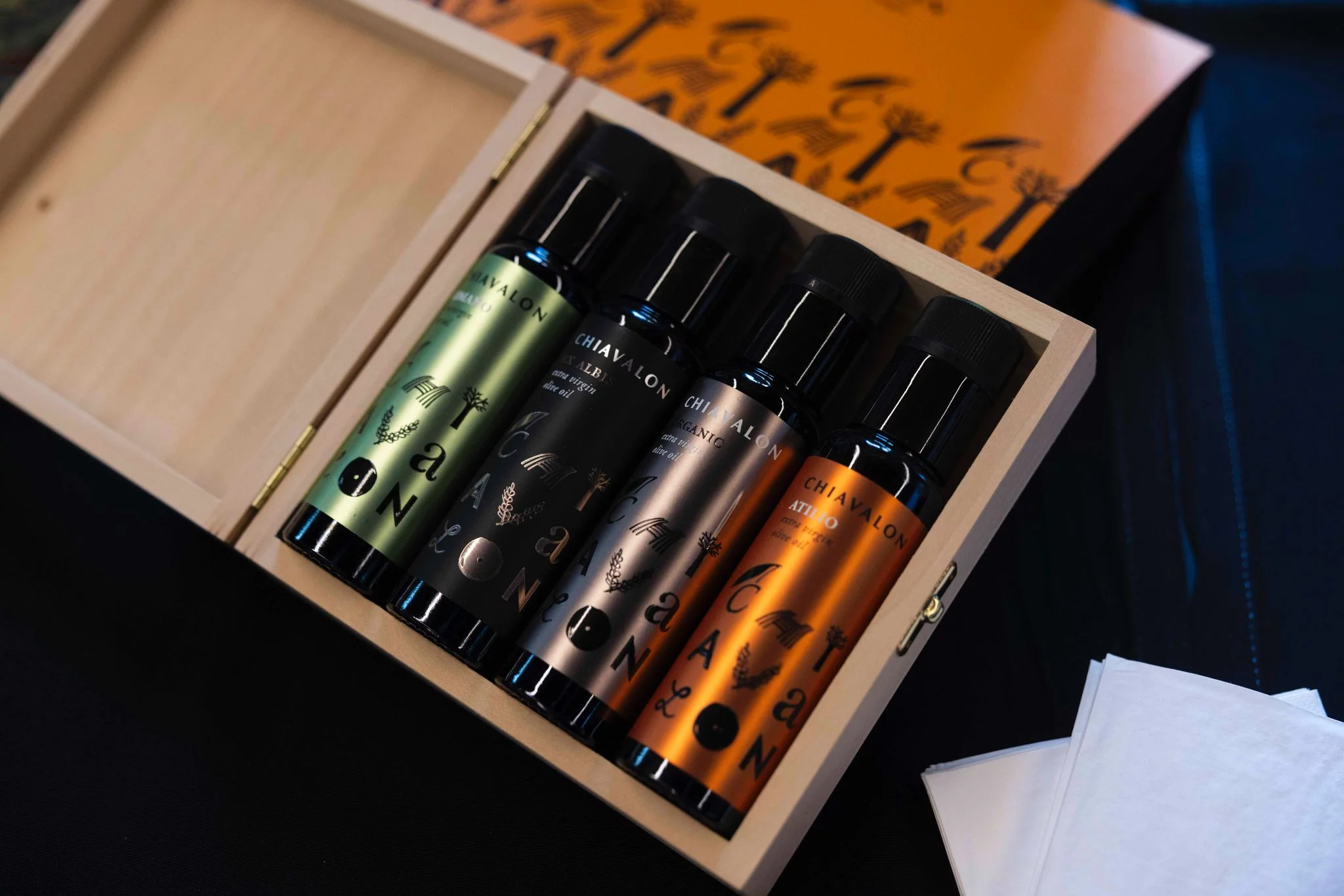
Badi’s collaboration with Chiavalon began 12 years ago – purely by chance, with a Facebook message Ivan’s father sent to the Chiavalon brothers. Today, the restaurant uses three of their olive oils: Istra, Organic, and Ex Albis, and they even surprise guests with their own homemade basil oil from time to time. Innovation with roots firmly planted in tradition.

Why Badi?

At a time when many restaurants try to impress with modern techniques, Ivan stays true to a philosophy of balance:

“You don’t need to go overboard with modern trends. People want the flavors of their childhood. Finding the middle ground – that’s our vision.”

As a host, Ivan is the heart and soul of Badi. His presence, humor, and expertise lift the entire dining experience – whether it’s during a multi-course dinner, a glass of wine, or a friendly chat with guests.

“Why Badi? Well, because of me, ha-ha! Because of a hundred different things – fresh ingredients, our team, our family, and the story we’ve been living for nearly 40 years.”

If you’re looking for a restaurant with an authentic atmosphere, flavors that tell a story, and people who are there because they love what they do – Badi is your destination.

Active Holiday in Vodnjan Area: Cycling and Walking Trails to Explore Nature and Cultural Heritage

Vodnjan area, rich in history, olive groves, and dry-stone walls, offers numerous opportunities for an active holiday. Whether you are a cycling or hiking enthusiast, here you will find routes that take you through picturesque landscapes, along the sea, through olive groves, to historical churches and traditional Istrian “kažuni” (stone huts). This is the perfect area for those who want to combine recreation with an authentic Istrian experience.

Cycling Trail 327 – Kažuni and Dry-Stone Walls

This circular cycling trail is 16.3 km long and takes you through a landscape full of “kažuni,” dry-stone walls, and olive groves—symbols of Istrian rural heritage. The surface is a combination of gravel and asphalt, making it suitable for recreational cyclists. Along the way, you will pass through the Kažun Park, a unique open-air museum of dry-stone architecture. The ride lasts between 1 and 1.5 hours and is ideal for those who want to combine cultural and sports experiences.

Cycling Trail 353 – Brijuni Riviera

This 13 km long trail takes you along picturesque parts of southwestern Istria, with views of the Brijuni National Park. The trail passes through Fažana and ends near Vodnjan, perfect for cyclists who want to enjoy the sea view and experience typical coastal villages.

Cycling Trail 366 – Sv. Stipan

This 10.5 km trail goes through the protected area of holm oak forest near Vodnjan. It is a quiet, peaceful route ideal for nature lovers and those seeking a more relaxed, calming cycling experience. Along the way, you’ll be accompanied by the sounds of nature, and the landscape offers plenty of shade and natural beauty.

Walking Trail Sv. Foška

The Sv. Foška trail is about 8 km long and one of the most famous pilgrimage routes in Istria. It leads from Vodnjan to the Church of St. Foška, a Romanesque church from the 11th century known for spiritual healings and local legends. Surrounded by nature, “kažuni,” and dry-stone walls, this trail is an ideal choice for a family outing and spiritual relaxation in nature.

Walking Trail of Medieval Paths

This thematic trail takes you through historic paths that have been used for centuries by peasants and traders. It passes through vineyards, olive groves, and gardens, along numerous dry-stone walls and “kažuni.” The trail offers various lengths and options, suitable for all ages, and along the way, you’ll discover hidden parts of the Vodnjan area and landscapes that evoke past times.

Trail Moj Kažun – La mia casita

This educational trail connects different types of “kažuni” and leads you through a landscape with the highest concentration of preserved examples of this traditional construction. The trail is perfect for a leisurely walk and learning about Istrian architecture, and visitors can learn how “kažuni” were built and why they are an important part of local heritage.

Whether you choose to cycle or walk, Vodnjan and its surroundings provide ideal conditions for exploring Istrian landscapes, with proximity to the sea, historical sites, and rich rural heritage. Each trail tells its own story and invites you to become a part of it.

Vorichi: A Culinary Tale from the Heart of Orihi

In the Istrian village of Orihi, near Barban, lies Konoba Vorichi – a place where tradition and authenticity meet a modern, thoughtful approach to food.

Known for its elegant ambiance reminiscent of an English countryside estate, complete with a beautifully maintained lawn and vineyard, this konoba offers dishes rooted in Istrian ingredients, including homemade prosciutto, sausages, cheeses, seasonal asparagus, and truffles. Special attention is paid to the presentation of dishes, with homemade sourdough bread, focaccia, and grissini served alongside their olive oil.

Owner Tamara has passionately led the konoba since 2013, focusing on innovation, quality, and a top-tier dining experience.

What’s in the Name “Vorichi”?

“Why Vorichi? When I looked up the land registry, I saw the parcel was registered under ‘Vorichi’. That’s when I realized why my grandmother Ulika always called our village ‘Vorihi’. The name has faded from use, but this is my way of keeping her memory alive,” Tamara explains.

Surrounded by the warmth of a fireplace, the aromas of herbs and food, and glass walls that bring the outside in, you feel like you’ve stepped into a fairytale. Tamara greets each guest with a smile, sharing her journey from opening the konoba in 2013 to the present, emphasizing their commitment to local ingredients.

Local Ingredients as a Foundation

Using local produce isn’t just a culinary choice – it’s the essence of Vorichi’s story. “Only three ingredients in our kitchen aren’t from Istria,” Tamara reveals. “Local produce is vital for capturing our terroir, history, and tradition.”

They cultivate their own herbs and recently introduced a small greenhouse for microgreens and other fresh elements. The seasonal menu reflects the rhythms of the land.

The Kitchen Led by Chef Matko Kovačević

For over a decade, Chef Matko Kovačević has shaped the menu at Vorichi. Trained at Kul IN in Croatia and Alma, Italy’s renowned gastronomic institute, his focus is entirely on quality, locality, and tradition.

The results are innovative yet rooted: traditional gnocchi with goulash, or unexpected combinations like saffron from Kaščergani, almonds, and sage from their garden.

Beyond handmade pasta in seasonal variations, they craft beef tartare with beetroot mousse. Their sourdough bread, focaccia, and grissini are baked fresh daily. Starters include curated cold cuts and seafood options.

When it comes to meat, it’s all about Black Angus, cooked in various ways over an open wood-fired grill.

Desserts? Think pralines filled with teran wine and liqueurs, truffle-infused rice pudding with ice cream, or creamy chocolate creations.

Wine & Pairing

You won’t lack wine options, and Tamara is happy to guide you through the perfect pairings for your meal.

Collaboration with Chiavalon

“I’ve known the Chiavalon brothers even before entering the hospitality world. They’ve always been a role model – a united family who succeeded through hard work and a deep connection to Istria. Their oils help elevate each of our dishes and emphasize the soul of our land.”

More Than a Meal – An Experience

Tamara believes that dining should be memorable. “We aim to create moments that guests cherish and remember with a smile – through our simplicity and sincerity.”

To visit, find them at Orihi 58, 52207 Barban. Reservations are a must: call +385 99 229 4300.

Sustainability and ethical olive oil production: Chiavalon’s commitment to environmental protection

At Chiavalon, sustainability is not just a trend—it’s the foundation of our practices. As a family-run olive farm located in the heart of Istria, we are dedicated to preserving the environment, reducing waste, and creating sustainable solutions at every stage of our extra virgin olive oil production. Here’s how we ensure that our olive grove, production, and products align with principles of environmental preservation.

Sustainable farming practices

Sustainable farming starts in our olive groves. Our approach includes using organic fertilizers, avoiding pesticides, and adopting natural methods that help preserve soil fertility. This not only protects the environment but also enhances the quality of the Chiavalon olive oil produced from our olives. Thanks to this approach, we promote biodiversity in the olive groves.

We follow the principles of minimum tillage, which means we avoid plowing the land. Instead, we sow carefully selected grass varieties that act as green manure, enrich the soil, and help retain moisture during dry periods. By significantly reducing the use of tractors and heavy machinery, we are able to minimize soil disturbance and drastically lower our carbon footprint.

Solar Energy as a pillar of Sustainability

At the Chiavalon estate, sustainability begins with energy. Two solar power plants with a total capacity of 62 kW provide the majority of the electricity needed – from cooling the olive oil to powering production equipment. By harnessing solar energy, the estate significantly reduces its carbon footprint and dependence on external energy sources. Additionally, an electric vehicle charging station is available on-site for guests and partners, further encouraging the use of renewable energy and eco-friendly transportation. The delivery van used on the estate is also fully electric, aligning logistics with our sustainable philosophy.

Zero waste: recycling and reuse

In the process of making Chiavalon olive oil, we aim to eliminate waste entirely. For example, the filters used during the oil extraction process, instead of being discarded, are repurposed as eco-friendly fire starters. This is just one of the ways we reduce our ecological footprint and contribute to conserving natural resources.

Additionally, the olive pits, a byproduct of the extraction process, we use them for heating, and replacing wooden pellets. In this way, we have local energy that we use ourselves, as well as supply to several dozen households around the mill, ensuring we are not dependent on global energy trends. 

Another innovative way we minimize waste is by using pomace (the leftover material after oil extraction) to make natural body creams. These creams are rich in antioxidants and moisturizing properties, and they continue our commitment to sustainability and eco-responsibility.

Sustainable practices in oil production

Our production process is not only environmentally responsible but also beneficial to health. In addition to using the most advanced cold-press technology, we enrich our extra virgin olive oil for cosmetic use with various herbs such as St. John’s Wortbay leaves, and rosemary. These herbs not only enhance but offer numerous health benefits. For example, St. John’s Wort is known for its anti-inflammatory properties, while rosemary promotes circulation, and bay leaves aid digestion.

Supporting local farmers

At Chiavalon, we believe in community, and we support local olive growers and farmers. By promoting Vodnjan and Istria as regions known for premium olive oil, we aim to raise awareness about the importance of local products. We are aware that successful and sustainable olive farming relies on collaboration and mutual dedication, so we work with other olive growers, sharing knowledge and resources. We also collaborate with local producers who make wine, cured meats, and cheese for us, which we use in our tastings.

We have an Eco garden where we grow vegetables according to strict ecological standards, which we use for all our tastings. At the family farm, any surplus is gladly donated and shared with our employees

Certifications and standards

Chiavalon takes pride in our organic certifications, which ensure that our olive oil is produced without the use of chemicals. These certifications guarantee quality and also demonstrate our commitment to the environment and the health of our customers.

Sustainability is more than just a word—it’s a way of life. Through eco-friendly practices, waste reduction, local community support, and the use of natural resources, we strive to make a difference in the world of olive oil production. With our extra virgin olive oil, you’re not only receiving an exceptional product but also contributing to our efforts to preserve the planet and promote a healthier, more sustainable way of life.

Atilio: the strongest olive oil in Chiavalon’s collection and its perfect pairing with steaks

At Chiavalon, we take pride in crafting oils that not only highlight the exceptional quality of Istrian olives but also cater to diverse culinary needs. One of our most unique and powerful offerings is Atilio – the strongest and most intense olive oil in our collection. Known for its bold flavor, it’s an ideal choice for adding depth and character to hearty dishes, especially when paired with a perfectly cooked steak. Here’s everything you need to know about Atilio and how it can elevate your steak experience.

What makes Atilio special?

Atilio is a premium, extra virgin olive oil that showcases the boldest side of Istrian olives. With a peppery, slightly bitter finish and a robust, grassy aroma, it is a true reflection of the region’s unique terroir. This oil is crafted from Istrian Bianchera, one of indigenous varieties known for their strong character and high antioxidant content.

Why Atilio is perfect for steaks?

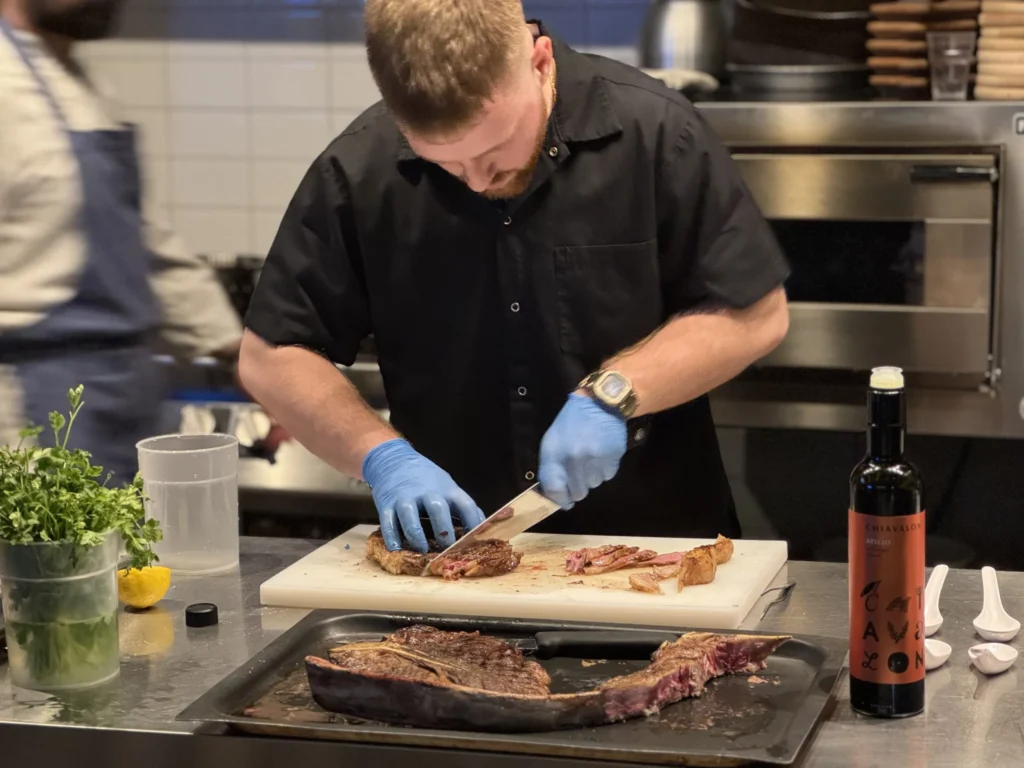
Steak, with its rich flavor and juicy texture, needs an oil that can complement its intensity without overpowering it. Atilio does exactly that. Its peppery and bitter notes cut through the fat of the meat, while its robust green olive flavor enhances the natural taste of the beef. Whether you’re grilling a steak or cooking it in a pan, drizzling Atilio on top before, during, or after cooking will take your steak to the next level.

Recipe: grilled steak with Atilio EVOO

Ingredients:

Instructions:

  1. Pat the steaks dry with a paper towel. This helps achieve a nice sear.
  2. Preheat your grill to medium-high heat. Grill for 4-6 minutes per side for medium-rare, or longer if you prefer a different level of doneness. 
  3. Once the steaks are done, let them rest for 5 minutes. Drizzle with Atilio olive oil  and sea salt before serving to enhance their rich flavor.

Recipe: pan-fried steak with Atilio EVOO

Ingredients:

  • 2 steaks (filet mignon, T-bone, or any other cut)
  • 2 tbsp Chiavalon Atilio extra virgin olive oil
  • 1 garlic clove, smashed
  • 2 sprigs fresh rosemary or thyme
  • Salt and freshly ground black pepper
  • 1 tbsp unsalted butter (optional)
  • Fresh lemon juice (for serving)

Instructions:

  1. Pat the steaks dry and season generously with salt and pepper.
  2. Heat a heavy skillet (preferably cast iron) over medium-high heat. Once hot, add the Chiavalon Atilio olive oil to the pan.
  3. Add the steaks to the pan and cook for 3-5 minutes per side, add the smashed garlic and fresh herbs to the pan to infuse the oil with additional flavors. If you want a richer finish, add 1 tbsp of unsalted butter.
  4. Remove the steaks from the pan and let them rest for a few minutes, drizzle with a little more Atilio olive oil and a squeeze of fresh lemon juice.  

Olive Oil myths debunked: what you need to know

Olive oil is widely regarded as one of the healthiest oils available, but there are still many myths surrounding it. In this article, we’ll debunk some of the most common misconceptions and shed light on the truths about olive oil.

Myth 1: Olive oil is unhealthy for cooking

Many people believe that olive oil isn’t suitable for high-heat cooking because it can turn rancid. In reality, extra virgin olive oil has a high smoke point (around 190–220°C/375–430°F), making it safe for cooking at medium to high temperatures. It’s an excellent choice for sautéing, grilling, and roasting. Dangerous olive oils as usually not “real olive oils” but mixed ones with other ingredients – when buying olive oil make sure to read the ingredients list. 

Myth 2: All olive oils are the same

Not all olive oils are created equal. Chiavalon extra virgin olive oil is produced using cold-pressing methods that retain its natural flavors and health benefits. The oil is processed at temperatures ranging from 19-21°C, utilizing the cutting-edge MORi-TEM technology for olive oil extraction, ensuring optimal quality and flavor preservation. Regular olive oil, on the other hand, may undergo refining processes that strip away nutrients and taste.

Myth 3: Olive oil is only for Mediterranean dishes

While olive oil is a staple in Mediterranean cuisine, it’s incredibly versatile and can be used in a variety of dishes. Whether you’re baking, making salad dressings, or even using it in desserts, extra virgin olive oil adds a rich depth of flavor to any dish. We use it in every dish for any type of cuisine – from eggs, pasta, meat to cocktails.

Myth 4: Olive oil can be stored anywhere

Proper storage is crucial for preserving the quality of olive oil. Storing olive oil in a cool, dark place and sealing it tightly ensures that it retains its freshness and flavor for longer.

Myth 5: Extra virgin olive oil has to be green

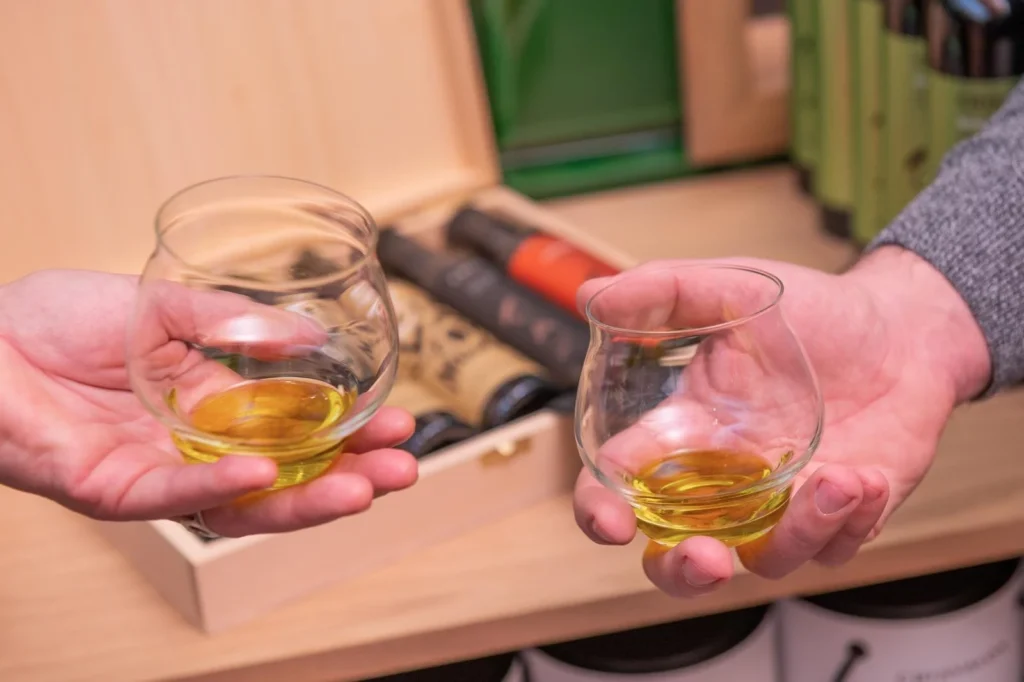
That is not the whole truth. Olive oil is green when it’s recently produced. During the year colour gets more golden, that’s why we call it liquid gold. Proof of this is that at competitions, judges use blue glasses for tasting to avoid being influenced by the color. The color of olive oil absolutely tells nothing about its quality.

Olive oil is a fantastic and versatile ingredient, but it’s important to separate fact from fiction. By understanding the truth behind these myths, you can choose the right olive oil in the store, create amazing dishes with it,  and enjoy its many benefits in your daily life.

0
    0
    Cart
    Cart is emptyU trgovinu